

Over my 7 years in marketing, I’ve seen countless trends come and go. But 2026 feels different. We’ve moved past the era of ‘tricks’ and hidden scripts. Today, I see that the only way to build a sustainable presence in your audience’s inbox is through radical transparency. This isn’t just my opinion—it’s how the technical infrastructure of the web has fundamentally changed aun deliverability infrastructure.
Let’s be real: in March 2026, email marketing feels like trying to navigate a minefield while blindfolded. One wrong move with your tracking, and suddenly your perfectly crafted campaign is rotting in a spam folder. The era of “sneaky” data collection is over. It’s not just about new laws or annoying pop-ups anymore—it’s a total shift in how the big players like Gmail and Yahoo decide if you’re a trusted sender or just another digital pest.
If you’re still relying on hidden pixels and opaque tracking, you’re playing a dangerous game. This isn’t just a minor tweak; it’s a fundamental change in email deliverability 2026 To survive, you need to trade “clever” for transparency and DMARC compliance. This deliverability infrastructure is essential for modern marketing.
In this guide, I’m breaking down why the old ways are killing your reputation and how to build a framework that actually gets you into the inbox. No fluff, just the facts and a 3-step plan to keep your marketing alive.
The Shifting Sands of Digital Privacy: A 2026 Perspective
The digital world in 2026 is a different beast. Users are smarter, and they’re tired of being watched. Major email providers (ESPs) have noticed, and they’re bringing the hammer down.
Look at the closure of platforms like NCSC Mail Check, set for March 31, 2026 (1). That’s not just a random tech update—it’s a massive signal. It shows that the very foundation of how we track and verify emails is being rebuilt from the ground up. We’re moving toward an ethical, accountable ecosystem. The short version? If you can’t be honest about what you’re doing, you’re out.
Why Everyone is Suddenly Obsessed with Transparency
It’s a mix of two things: laws and “gatekeepers.” Sure, we have GDPR and CCPA, but the real pressure is coming from Gmail and Yahoo. They’re setting rules that go way beyond what the law requires. Why? Because they want to protect their users from spam, phishing, and creepy surveillance. They want to make email a place where people actually feel safe clicking things. If you align with that goal, you win. If you fight it, you’ll never see the inside of a primary inbox again.
The Slow Death of Anonymous Tracking
For years, anonymous tracking was the “secret sauce” of email marketing. We used invisible pixels, logged IPs, and fingerprinted browsers to see exactly what people were doing without them ever knowing.
But here’s the thing—those days are gone.
Modern email clients and browsers are now blocking or “fuzzing” these pixels by default. Open rates? They’re becoming a ghost metric. Even worse, the AI inbox algorithms at Google and Yahoo are now smart enough to spot intrusive tracking from a mile away. They don’t just block the pixel; they penalize the whole email. This hits your email deliverability 2026 hard, pushing your messages into the “Junk” abyss regardless of how good your content is.
How “Hidden” Tracking Actually Hurts You
It’s a triple threat to your business:
1. It kills subscriber trust. People aren’t stupid. When they realize they’re being watched covertly, they feel uneasy. They don’t just unsubscribe; they hit the “Spam” button. And those negative signals are like poison to your sender reputation.
2. It trips the technical alarms. Complex tracking URLs and weird redirects look suspicious to spam filters. Even if your offer is 100% legit, your tech might be screaming “phishing” to the automated guards.
3. The industry is moving on. As I mentioned with the NCSC Mail Check shutdown (1), the industry is actively closing the loopholes that “sneaky” tracking relies on. If you’re still using 2022 tactics in 2026, you’re basically asking to be blocked.
The Problem with Opaque Practices: Why 2026 is Different
The challenge today isn’t just “getting delivered.” It’s about being wanted. If you’re hiding your data practices, you’re not just risking a spam filter—you’re destroying your brand’s long-term value.
Gmail and Yahoo Aren’t Playing Around
These two are the ultimate gatekeepers. Their AI inbox algorithms are constantly learning. They look at your authentication (SPF, DKIM, DMARC), how people interact with you, and—most importantly—what kind of tracking tech you’re using.
If you fail their “sniff test,” your emails might be silently diverted to the junk folder. You won’t even get a notification. You’ll just see your sales drop and wonder what happened. They’re doing this to keep the “marketing circus” under control, and frankly, I can’t blame them.
The Trap of Cheap AI Content
I love AI, but let’s be honest: using it to blast out generic, keyword-stuffed emails is a death sentence in 2026. ESPs can spot mass-produced, low-quality AI junk in seconds.
The hidden cost isn’t just a failed campaign; it’s a permanent stain on your sender reputation. If you want to use AI, use it to help you be more human, not less. Use it for segmentation or brainstorming, but never let it hit “send” without a human touch. Generic output is the fastest way to trigger spam filters.
Once Trust is Gone, It’s Gone
In an era of constant data breaches, subscriber trust is your most valuable asset. If people think you’re peeking over their shoulder without permission, they’ll leave. And once they mark you as spam, it is incredibly hard to get back into their good graces. In 2026, being transparent isn’t just “nice”—it’s a competitive advantage.
The Solution: Radical Transparency and User-Centricity
So, how do you fix this? You stop hiding. You embrace what I call “Radical Transparency.” This isn’t just about following rules; it’s about a philosophy that puts the subscriber first.
Tell Them What You’re Doing (and Make it Easy to Leave)
Stop hiding your privacy policy in 8-point font at the bottom of a page. Tell people exactly what you’re collecting and why it helps them.
And for heaven’s sake, make unsubscribing easy. If I have to log in or click through three screens to leave your list, I’m just going to report you as spam. A one-click unsubscribe link in the header is now a baseline requirement for email deliverability 2026. Let people leave gracefully. It keeps your list clean and your reputation high.
The “Big Three” of Authentication: DMARC, SPF, and DKIM
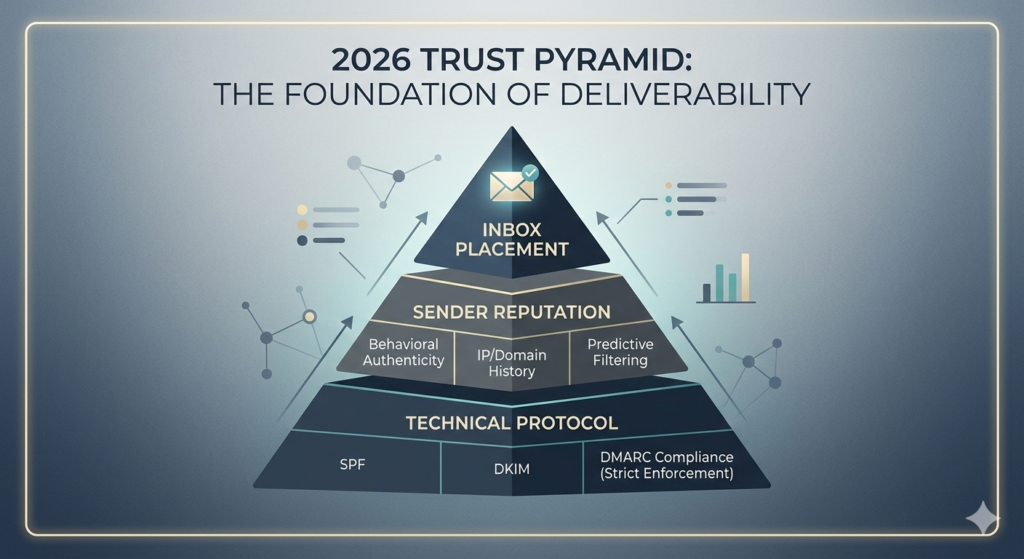
This is the technical “must-have.” DMARC compliance, SPF, and DKIM are how you prove you are who you say you are.
If you haven’t set these up, you’re basically a stranger knocking on a door in a dark alley. ESPs won’t trust you. A solid DMARC policy (aim for `p=quarantine` or `p=reject`) tells the world that your domain is secure. It’s the single best thing you can do for your technical reputation (4).
Quality Over Quantity: The AI-Assisted Human Touch
In the world of the AI inbox, “good enough” content isn’t good enough anymore. You need to provide real value.
* Use AI strategically: Let it handle the boring stuff like A/B testing or subject line tweaks.
* Keep a human in the loop: Always review what the AI writes. Ensure it sounds like you, not a robot.
* Focus on value: If your email doesn’t solve a problem or entertain, don’t send it.
When you combine AI efficiency with human creativity, you bypass spam filters and actually get people to click. That’s how you win at engagement metrics like CTOR.
Your 2026 Deliverability Roadmap: 3 Steps to Success
If you want to stay in the inbox, you need a plan. Here is the 3-step framework I recommend for every marketer I talk to.
Step 1: Fix Your Technical Foundation
This is the “hygiene” phase. You can’t skip it.
* Lock down DMARC, SPF, and DKIM: Don’t just set them and forget them. Monitor your reports. Make sure nobody is spoofing your domain. This is the bedrock of trust (4).
* Use TLS Encryption: Ensure your emails are sent via TLS 1.2 or higher. Unencrypted mail is a massive red flag for privacy-conscious ESPs. If it’s not encrypted, it’s probably going to spam.
Step 2: Build Trust Through Transparency
Now that the tech is solid, focus on the relationship.
* Double Opt-in is Non-Negotiable: It’s the only way to be 100% sure someone actually wants your emails. It kills spam complaints before they even start.
* Be Blunt About Data: Tell people what you track. If you use pixels to see if they opened an email, say so! Explain that it helps you send them more of what they like. Most people are fine with it if you’re honest.
* One-Click Unsubscribe: Put it in the header. Seriously. Don’t make them hunt for it.
* The Preference Center: Let people choose how often they hear from you. It’s better they receive one email a month than none at all because they hit “Unsubscribe” (or “Spam”).
* Own Your Tracking: If you’re using UTMs or pixels, be open about it. Offer an opt-out if you can. You might lose some data, but you’ll gain subscriber trust, which is worth way more in the long run.
Step 3: Optimize for Real Engagement
Stop chasing “vanity metrics” and start looking at what matters.
* Hyper-Segmentation: Don’t blast everyone. Use AI to group people by what they actually care about. Personalization in 2026 is about *relevance*, not just putting a name in a subject line.
* Content that Matters: Every email should educate, entertain, or solve a problem. High-quality content is your best defense against spam filters.
* Test Everything: A/B test your subject lines, your layout, your send times. Use the data to get better every single time.
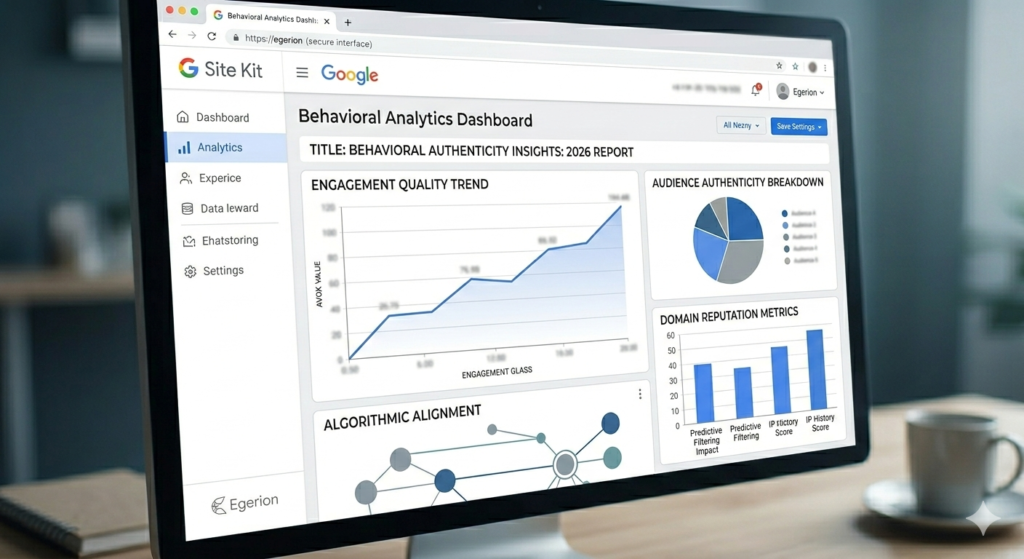
* Watch the Right Metrics: Open rates are “meh” now. Focus on CTOR (Click-to-Open Rate). It tells you if the people who opened actually liked what they saw (7).
* Manage Your Reputation: Keep an eye on your sender score. If you see a dip, investigate immediately. Your reputation is your lifeblood.
The 2026 Numbers You Need to Know
Benchmarks have changed. Here’s what “good” looks like right now:
* Open Rate (OR): Expect 31% to 36.5%. If you’re hitting 45.1%, you’re a rockstar (5). But remember, these numbers can be “noisy” because of privacy blocks.
* Click-Through Rate (CTR): Aim for 2.3% to 2.68% (6). This is a much more reliable metric for content quality.
* Click-to-Open Rate (CTOR): This is the one I watch. It proves your content is actually hitting the mark once the email is open (7).
* ROI: Email is still the king of ROI, bringing in $36 to $45 for every $1 spent (8). But you only get those numbers if you stay in the inbox.
Case Studies: How the Giants Enforce the Rules
Gmail’s AI Guard Dog
Gmail’s AI inbox is incredibly smart. It doesn’t just look for keywords; it looks for “creepy” tracking pixels and generic, low-value content. If you’re relying on 2020-era tracking, Gmail will probably neutralize it or just send you to spam. They also basically force you to have a one-click unsubscribe now. Adapt or die.
Yahoo’s “No Authentication, No Entry” Policy
Yahoo is the king of DMARC enforcement. If you don’t have your records in order, you’re going to have a hard time. They also provide great feedback loops, so if people are complaining, you’ll know—and you better fix it fast.

Bottom Line: The Future is Honest
The world of email marketing in 2026 isn’t scary; it’s just more honest. The death of anonymous tracking is actually a good thing. It forces us to be better marketers, to build real relationships, and to provide actual value.
By embracing transparency, locking down your DMARC compliance, and respecting your subscribers, you’re not just following rules—you’re building a business that lasts. The statistics prove it: ethical, user-centric marketing wins every time.
So, take a look at your setup. Are you being honest? Are you being valuable? If the answer is yes, you’re going to do just fine in 2026.
Sources and References:
- NCSC Mail Check Retirement [1] – The structural shift in email verification.
- Email Tracking Disclosure Guide 2026 [2] – How to stay compliant.
- Email Marketing Trends 2026 [3] – What’ s coming next.
- DMARC Implementation Guide [4] – Why you can’ t wait on authentication.
- Email Marketing Stats 2026 [5] – Industry benchmarks.
- HubSpot Marketing Data 2026 [6] – Trends and action items.
- 13 Key Metrics for 2026 [7] – Beyond the open rate.
- Email ROI Statistics [8] – The value of a clean list.