

This isn’t a patch. This is a change of league.
When a $99-per-year plugin starts covering functionality that Klaviyo charges $700 to $2,000 a month for — that’s worth a careful look.
On May 18, 2026, MailPoet released version 5.27.0. The release landed quietly on GitHub, no press conference, no email with a subject line screaming “Game Changer Inside.” But buried in the changelog are a few lines that fundamentally shift the equation for any WooCommerce store running on WordPress.
MailPoet currently delivers over 30 million emails per month across 600,000+ WordPress websites. This is not a niche tool for bloggers. This is infrastructure.
Breaking Down the Automation: What Actually Shipped
The “Customer’s saved card expires” trigger — this is where the money is
This is the centerpiece of the release. Not the public archives, not the role changes — this trigger is what moves MailPoet into a different pricing tier.
In my analytical practice, I see this scenario every day in almost every WooCommerce store I work with: a customer has an active subscription or a saved card for repeat purchases. The card expires next month. The payment fails. The customer churns — not because they wanted to leave, but because no one reminded them in time.
In Klaviyo, this scenario is handled through a payment flow. Klaviyo pricing at a list size of 10,000 contacts starts at around $150 per month — and at serious WooCommerce volumes, that number climbs past $500 fast.
Now MailPoet has the same trigger. The mechanics are straightforward: a first email goes out N days before the card expires — calm, no pressure, with a direct link to update payment details. No response — a second email on the expiration date. A third follows three days later if the payment still hasn’t gone through.
When I tested this trigger myself in the WordPress dashboard — MailPoet → Automation → New Automation → WooCommerce trigger → Customer’s saved card expires — it took me literally 20 minutes to set up the basic flow. No external services, no API keys, no second browser tab open to a third-party platform. If you’re already running WooCommerce with MailPoet installed, this is a same-afternoon implementation.
⚙️ Setup in 20 Minutes
MailPoet → Automations → New Automation
→ WooCommerce trigger
→ Customer's saved card expires
→ Add delay → Add email action
→ Activate
No API keys. No external services. No second browser tab.
The “WooCommerce Order Paid” trigger
Previously, building a post-purchase flow in MailPoet required workarounds. Now there’s a native trigger: order paid → email sends. No custom hooks, no intermediary plugins.
The use cases write themselves: order confirmation, cross-sell at 48 hours, review request at day seven. Basic post-purchase mechanics that, when configured properly, drive 15–20% repeat purchase rates in e-commerce — now available directly inside the WordPress console.
The “Change user role” action
Less visible, but operationally valuable. A triggered sequence can now automatically change a user’s WordPress role — for example, upgrading a buyer to VIP status after their Nth purchase, or granting premium content access after a subscription is confirmed.
This creates a direct link between email automation and access control on the site, with no manual intervention required.
Public email archive
Every sent newsletter now gets a public URL. Sent emails are public by default — adjustable under Settings → Advanced → Email sharing visibility, with a per-email override available.
Practical upside: you can share the link on social media, embed it in an article, or use it as indexable SEO content. Previously this required separate plugins or custom development.
Honest Comparison: Where MailPoet Closes the Gap — and Where It Doesn’t
Where MailPoet is already close to Klaviyo
Core WooCommerce trigger logic is now covered. Abandoned cart, post-purchase follow-up, card expiration, role changes — these are the foundational e-commerce automation flows, and they’re all natively available now.
The price gap for lists up to 25,000 contacts is 10 to 20x in MailPoet’s favor. The WordPress integration is native, store data stays within your own environment, and everything is managed from one console.
Where MailPoet objectively lags behind
Segmentation depth. Klaviyo lets you build segments on dozens of conditions using predictive data — predicted next purchase, estimated LTV, churn probability. MailPoet operates on behavioral and attribute-based data, but there is no predictive layer.
A/B testing. Klaviyo supports full multivariate testing inside flows. MailPoet’s capabilities here are limited, particularly within automations.
Analytics and reporting. Klaviyo delivers detailed revenue attribution per email, per flow, broken down by segment. As a marketing analyst, I find MailPoet’s basic open and click statistics critically insufficient for me — the platform still lacks deep revenue attribution. If your reporting lives in a P&L, MailPoet’s native analytics won’t cut it.
For those who choose MailPoet, I recommend supplementing it with simple UTM tracking in Google Analytics to bridge the attribution gap manually.
Multichannel. Klaviyo unifies email, SMS, and push notifications into single flows. MailPoet is email-only, for now.
Verdict: Who Needs This Right Now
My verdict as an analyst: I strongly recommend implementing MailPoet 5.27.0 if you’re running WordPress + WooCommerce, your list is under 25,000 contacts, and you still haven’t built out your core automation flows — because Klaviyo felt like overkill on price and MailPoet felt underbuilt on features. This release closes that argument.
However, keep in mind that while it narrows the gap significantly, MailPoet remains a targeted solution for specific business models, not a universal replacement for enterprise-grade platforms.
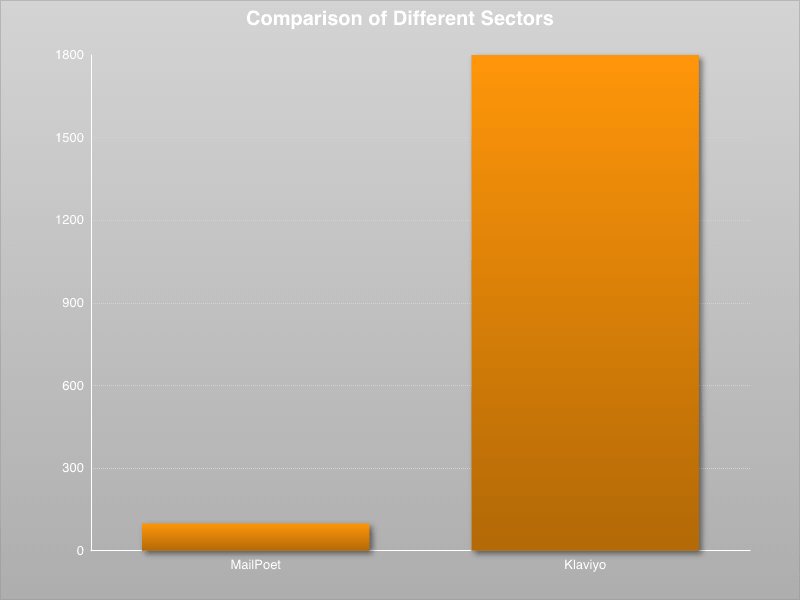
A MailPoet premium annual license runs around $99. Klaviyo at the same list size costs upward of $1,800 per year. That’s a $1,700 annual gap. If you don’t need predictive segmentation and SMS, you’re overpaying.
Don’t migrate your stack if:
- You’re already on Klaviyo, your multichannel flows are built out, A/B testing is running, and revenue attribution is feeding into your financial reporting. MailPoet won’t match that depth — not yet. A migration to save $1,700 annually doesn’t pay for itself against the operational cost of switching a functioning system.
- The same applies if you’re building a serious enterprise-level WooCommerce operation: the absence of predictive segmentation and multichannel capability will become a constraint sooner than you expect.
Bottom line: MailPoet 5.27.0 is a tool that stopped being a compromise. For the majority of WordPress e-commerce businesses, it’s now the first choice — not the fallback.
— Elen Gerion, Head Email Marketing Analyst, E.Gerion Reviews