


1.Three Days in Figma for an Email Nobody Actually Read.
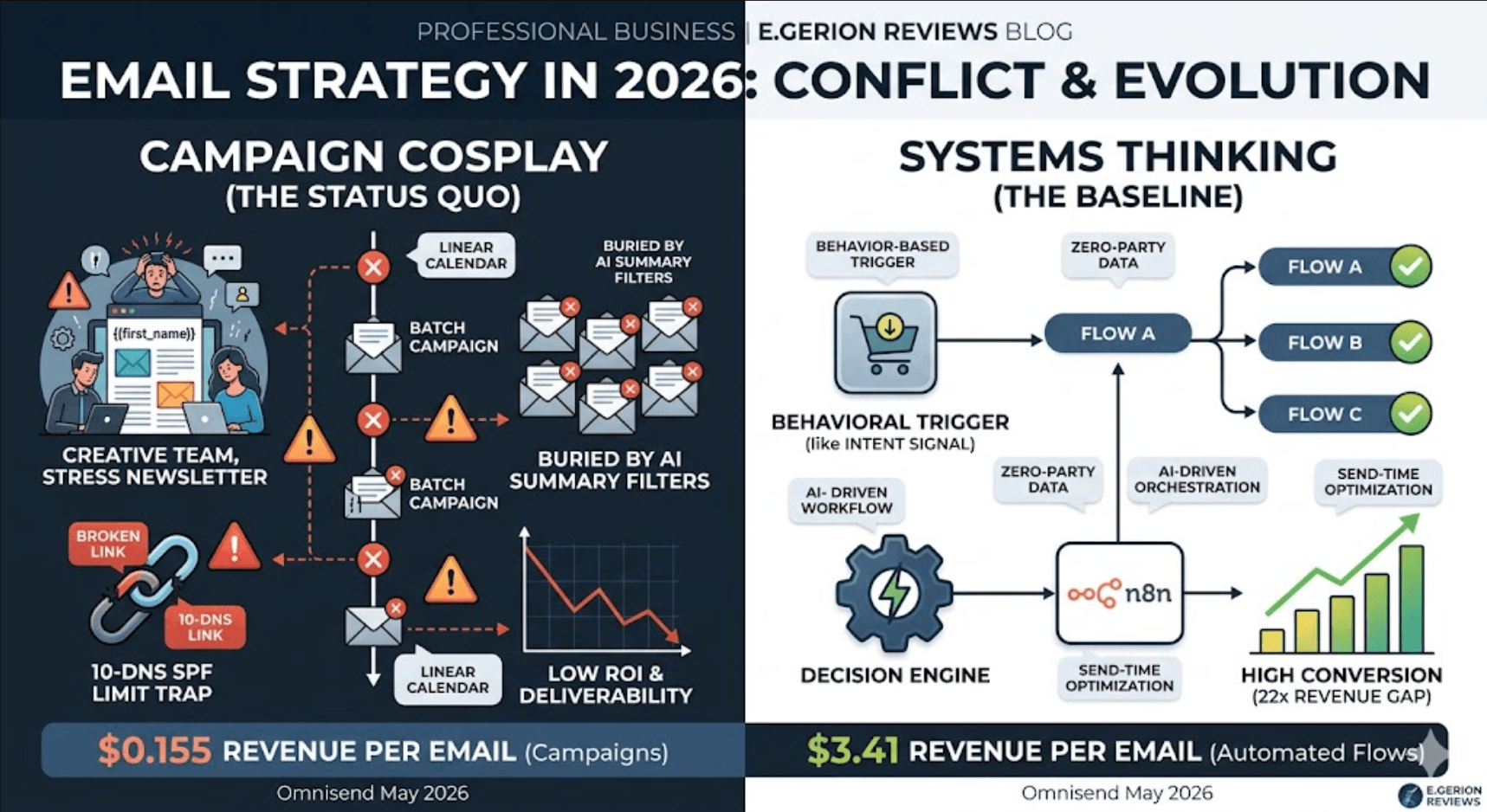
I watched it happen in real time, and I’ll be honest — it felt like watching someone set money on fire with a lot of enthusiasm. This is the stark reality of manual campaigns before a business transitions to structured email marketing automation. Three emails. One behavioral trigger. Zero creative meetings. That’s the 22x gap.
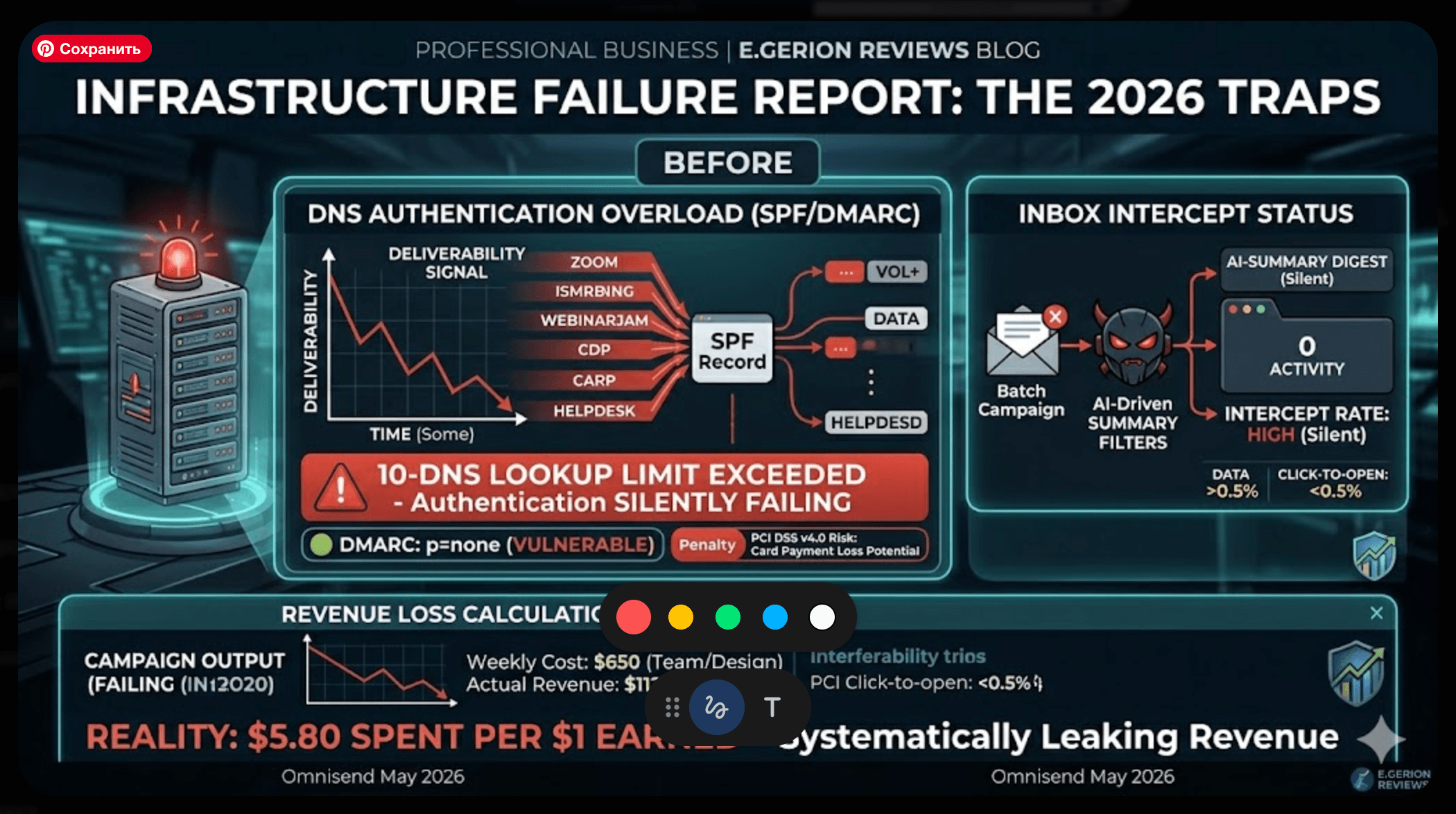
The client was a mid-sized e-commerce brand. Average order value around $50, a clean list of 38,000 subscribers, a solid product with real repeat-purchase potential. The kind of setup where email should be printing money. Instead, the team spent three days producing their weekly newsletter: a designer on contract, a copywriter, two rounds of revisions, four Zoom calls about button color. Total operational cost, including everyone’s time — roughly $650 for one email.
It went out on a Thursday morning. By Friday, the numbers were in: open rate 29%, click rate 1.1%, revenue — $112.
That’s not a rounding error. That’s a cost-per-dollar-earned ratio that would make any CFO quietly close the browser tab. For every dollar the newsletter brought in, the team spent nearly six dollars producing it. And that’s before you factor in the creeping suspicion that a significant chunk of those “opens” were Apple’s Mail Privacy Protection preloading the tracking pixel — not actual humans choosing to engage.
Meanwhile, running quietly in the background of the same account: an abandoned cart sequence. Set up fourteen months ago. Never redesigned. Never discussed in a Zoom call. That same week, it generated $4,200. Three emails. One behavioral trigger. Zero creative meetings.
That’s the 22x gap. Not a metaphor. Not an industry average you can explain away with vertical differences or audience size. Pure arithmetic — and in 2026, it’s getting wider.
I’m not here to argue that newsletters are worthless. A well-crafted editorial email builds trust, sustains attention, and does real long-game relationship work. But when it consumes 80% of a team’s email bandwidth while automated flows do the actual revenue lifting in silence — that’s not a content problem. That’s a structural misallocation of effort, and the May 2026 data makes it impossible to ignore.
2.The Hard Truth: What’s Actually Behind the 22x Number.
On May 12, 2026, Omnisend published a benchmark report that should have been front-page news in every marketing channel worth following. Instead, it slipped past most teams — probably because its conclusions are uncomfortable for anyone whose career is built around producing beautiful mass sends.
The dataset: over 20 billion campaign emails and 470 million automated email sends across more than 27,000 brands. This isn’t a sample. It’s a verdict.
22x more revenue per email — automated flows vs. broadcast campaigns. $3.41 average revenue per automated email vs. $0.155 for a campaign send. 1.49% conversion rate for automated flows vs. 0.08% for broadcasts. 19x higher conversion rate — not a rounding difference, a structural one.
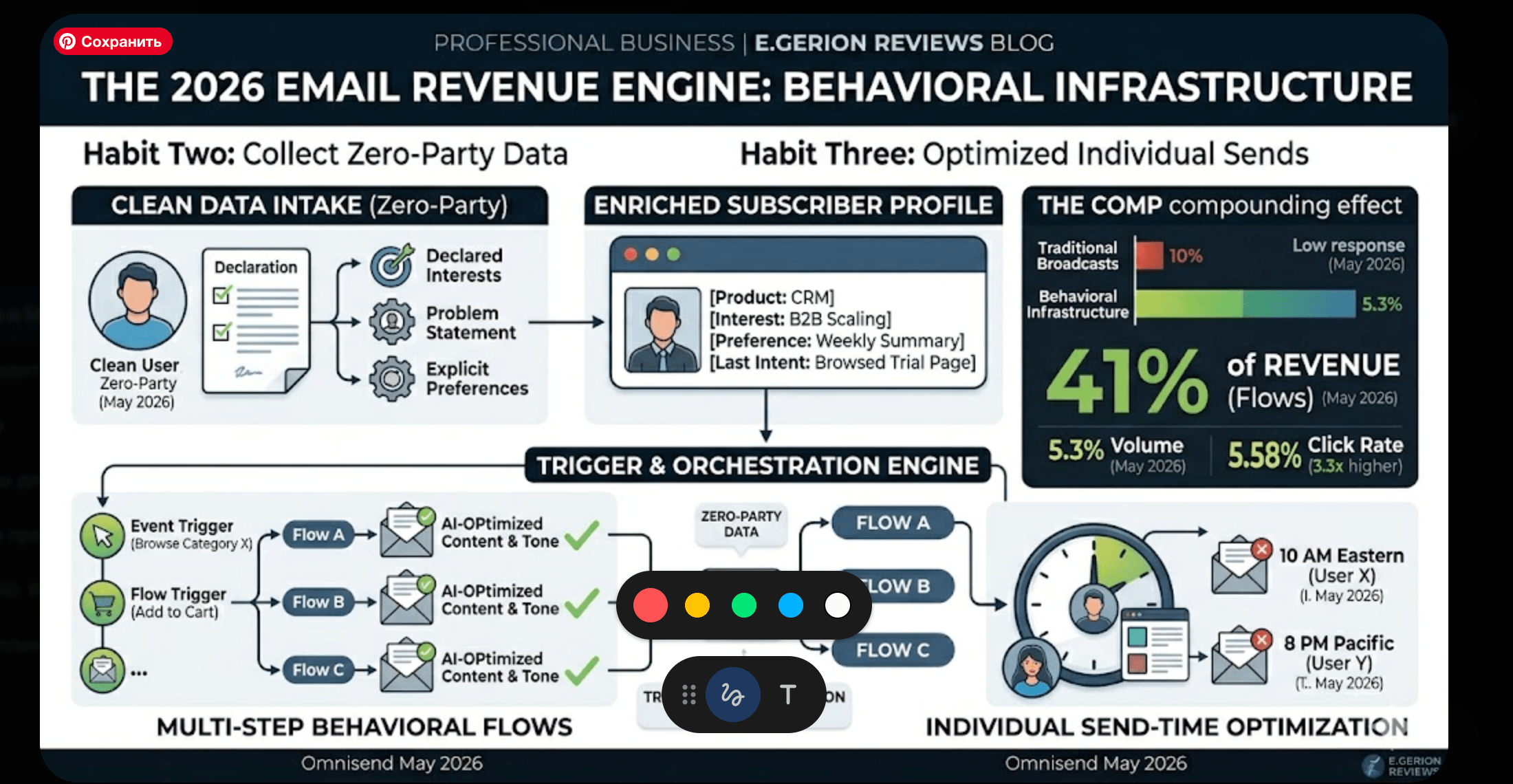
Klaviyo’s 2026 data adds the volume dimension. Across 183,000+ brands, email flows generate 41% of total email revenue from just 5.3% of total send volume. Flow click rates hit 5.58% versus 1.69% for broadcast campaigns — more than three times higher, at a fraction of the sends. Top performers achieve double the average across opens, clicks, and placed order rates.
Sit with that for a moment. Forty-one percent of the revenue. Five percent of the work, by volume.
Why intent mechanics decide everything in email marketing automation.
This isn’t about better timing or prettier templates. The reason automated flows outperform broadcasts by this margin comes down to one concept: the subscriber’s moment of decision.
A behavioral email arrives when someone has already taken a partial action. They put something in their cart — which means they were actively considering a purchase. They browsed the same product category three times in a week — which means they have a problem they’re trying to solve. They clicked a pricing page and left — which means cost is likely the friction point. The email that follows each of these actions isn’t interrupting someone. It’s answering a question they already have.
A broadcast newsletter arrives independent of what that person did yesterday, last week, or at 2am on Saturday when they were apparently browsing your catalog. It lands in an inbox competing with 50 to 120 other emails that day — because that’s the real range for the average subscriber in 2026. It has a subject line, a sender name, and approximately 17 seconds of human attention before the decision is made. There’s no context. There’s no moment. There’s just noise fighting noise.
Modern email marketing automation flows belong to a different category of communication. They’re not advertising. They’re service. That’s why people open them, click them, and buy through them.
The measurement problem nobody wants to admit.
There’s one more layer making this worse. Open rate as a KPI is essentially compromised. Apple’s Mail Privacy Protection preloads the tracking pixel on Apple devices regardless of whether a human actually opened the email. Gmail’s Gemini AI summarizes email content directly in the inbox interface — users extract information without ever triggering an open event. If your weekly newsletter is showing 43% opens, a meaningful portion of that number is machine activity, not human attention.
The right questions in 2026 are: what’s your click-to-open rate — a real proxy for post-open interest? What’s your conversion rate per email type? What’s your revenue per recipient? By every one of those metrics, the gap between automated and broadcast isn’t closing. It’s widening.
3.The 2026 Infrastructure Traps Quietly Breaking Your Deliverability
Before any conversation about flow strategy makes sense, there are two technical realities of 2026 that can silently undermine everything — not with loud errors, but with emails that just disappear.
f you need a reliable platform to execute this strategy without hitting AI spam filters, check out my head-to-head test: HubSpot vs GetResponse vs ActiveCampaign.
The SPF 10-lookup trap
Most marketing teams add tools to their stack without thinking about DNS. A CRM. An email automation platform. A helpdesk with outbound notifications. A separate transactional email service. A customer data platform. Each of these adds an include statement to your SPF record, and the SPF specification caps total DNS lookups at 10. If your infrastructure fails this 10-lookup limit, your automated messages will land straight in spam. To prevent this, you can follow our comprehensive guide on email authentication standards in 2026 to fix your SPF, DKIM, and DMARC settings. Run your domain through MXToolbox…
When you exceed that limit, SPF fails silently. No warning in your ESP dashboard. No bounce notifications. No obvious symptoms. Emails continue sending. Some arrive. Others quietly route to spam or get rejected at the SMTP level. You see a gradual degradation in metrics and assume it’s audience fatigue or content quality. In reality, your authentication infrastructure broke sometime after you onboarded your fourth SaaS tool — and nobody noticed.
If you’ve added any new platforms to your sending stack in the last 12 months without auditing your SPF record, there’s a real probability you’re already over the limit. Run your domain through MXToolbox or DMARC Analyzer right now and count the lookups. It takes four minutes and could explain a performance drop you’ve been attributing to the wrong cause for months.
PCI DSS v4.0: DMARC became a legal requirement
In 2026, DMARC stopped being a topic for the security team alone. PCI DSS v4.0 — mandatory from 2025 — requires DMARC compliance for every organization that processes cardholder data. The penalties for non-compliance range from $5,000 to $100,000 per month, and in extreme cases, revocation of the ability to process card payments entirely.
The adoption picture from EasyDMARC’s 2026 report is stark: global DMARC adoption has reached 52.1% of the top 1.8 million domains, up from 27.2% in 2023 — which sounds like progress until you realize more than half of those domains are sitting at p=none, a monitoring-only policy that provides zero actual spoofing protection. Fortune 500 companies are at 95% adoption, with 62.7% at p=reject. Small and mid-sized businesses tell a different story: only 15.2% have enforced a strict policy.
For any e-commerce or SaaS operation running payment flows: if your DMARC isn’t at minimum p=quarantine, this isn’t technical debt anymore. It’s active legal exposure and a live deliverability threat. Google, Yahoo, and Microsoft all require SPF + DKIM + DMARC for bulk senders. Outlook rejects non-compliant mail with error code 550 5.7.15 — permanent failure, no retry.
Authentication isn’t an advanced optimization. It’s the entry ticket to the 2026 inbox. Without it, sophisticated segmentation and beautifully designed templates are sending into a void.
4.Campaign Cosplay vs. Systems Thinking: What the Biggest Brands Said Out Loud
At the Email Insider Summit Q2 2026, something worth paying attention to happened. Several major consumer brands described, publicly and in operational detail, how they’d fundamentally restructured their approach to email — and what they said doesn’t fit neatly into the standard agency pitch deck.
Hilton: from calendar to behavior
Hilton is not a startup with an agile team and a blank-slate infrastructure. It’s a global hospitality brand with tens of millions of subscribers, legacy email systems built over years, and every organizational constraint that comes with operating at that scale. And yet: Hilton’s representatives described a complete transition from calendar-based campaigns to behavior-based communication. Emails deploy in response to what a user is doing, not because Thursday at 10am is when the newsletter goes out.
Search activity on the site. Booking history. Categories of hotels being browsed. Check-in date searches. All of it becomes trigger logic. The underlying philosophy is a direct rejection of the assumption that a marketing team knows what to say to everyone at the same time — in favor of a system that responds to what a specific person is doing right now.
The ROI difference when you make this shift isn’t measured in percentage points. It’s measured in multiples.
Etsy: the case for owning your audience
Etsy’s message was structurally different but pointed in the same direction. In a market where algorithmic platforms have become progressively less predictable — where search visibility can drop 40% overnight and social organic reach is a fraction of what it was — direct access to an audience through owned channels isn’t a secondary marketing objective. It’s the primary strategic asset.
The email list isn’t a byproduct of your marketing activity. It’s the core of it.
Etsy was also explicit about zero-party data as the only reliable personalization foundation in a privacy-first inbox environment. Zero-party data is what users tell you directly: preferences declared in an onboarding survey, explicit interests stated in a preference center, deliberate choices made in response to a direct question. Not behavioral inference, not cookie-based modeling. Explicit consent for a specific conversation. In a world where Apple and Gmail are increasingly mediating what subscribers actually see, this is the signal that survives every filter update.
Hibbett: AI frees humans from segmentation mechanics
Hibbett’s contribution was the most operationally specific. The sportswear retailer described AI automating the segmentation work that previously consumed several days per month. The punchline wasn’t “we reduced headcount.” It was: “our team is now focused on retention strategy rather than list management.” That’s the honest version of AI integration in email marketing — it handles the mechanics so humans can think about the narrative.
The through-line across all three brands is the same. A move away from what I’d call campaign cosplay — the performance of active marketing through volume and visual sophistication — toward genuine systems thinking, where every email is a response to a specific context belonging to a specific person.
5. A Practical Roadmap: Three Structural Habits for 2026 Email Marketing Automation
What follows isn’t a trend report or a list of tools to evaluate. These are three operational changes to how you think about email infrastructure that shift performance toward automated-level results. They can be started today without stopping your current campaigns.
Habit one: audit what’s already working before building anything new
The first move is not launching new automations. It’s understanding which automations are already generating revenue — and how that compares to what your broadcast campaigns are producing.
Open your ESP and filter your active automated sequences. Calculate revenue per email separately for flows and for campaign sends. If you don’t have that number, that’s the real problem: you don’t know what’s making money. Fix the measurement before fixing the strategy.
Once you have the data, identify the three behavioral scenarios with the highest revenue potential for your model. For e-commerce, this is almost always abandoned cart (typical recovery rates of 5–15%), browse abandonment (lower conversion but significant volume), and post-purchase follow-up for retention and upsell. For SaaS: trial activation sequences, feature adoption flows triggered by usage gaps, and churn prevention logic based on declining activity signals.
Build or improve those three before touching the next newsletter.
The benchmark to calibrate against: if your flows aren’t yet generating 35–40% of your email revenue from 5–7% of your send volume, there’s significant unrealized potential sitting in your existing infrastructure.
Habit two: collect zero-party data instead of inferring it
Privacy-first inboxes in 2026 have made third-party data unreliable and behavioral inferences less precise than they used to be. The only stable personalization signal is data the subscriber gave you explicitly.
Implement a preference center at signup — not a five-field form, but three targeted questions. What are you most interested in? How often do you want to hear from us? What’s the primary problem you’re trying to solve right now? These answers give you context that doesn’t expire and doesn’t violate privacy constraints.
Add progressive profiling logic to existing flow sequences. Every third email in an onboarding series can contain a single clarifying question — one question, three answer options, directly in the email body. Not a form. Not a redirect. An in-line interaction that enriches the subscriber profile without friction while increasing engagement simultaneously.
The long-term compound effect of this is substantial: a list where 40% of subscribers have declared preferences outperforms a larger list of anonymous contacts by a margin that makes list size largely irrelevant.
Habit three: stop sending to everyone at the same time
“Best send time” as a universal truth is a myth designed to make average advice sound scientific. The real insight in the data — evening sends around 8pm show open rates approaching 59% — is useful as a starting point and misleading as a rule, because it averages over enormous individual variation.
Modern ESPs — Klaviyo, ActiveCampaign, Drip, and most enterprise platforms — include send-time optimization that analyzes when each individual subscriber has historically engaged and delivers into their personal activity window. Enabling this for all flow emails is a single settings change that typically yields 15–25% lift in open rates with zero changes to content.
For broadcast campaigns, segment sends by timezone as a minimum viable step. Sending at 10am Eastern to a mixed US/UK/EU list means a meaningful portion of your audience receives that email at 3am. That’s not a scheduling oversight. It’s a structural signal to inbox algorithms that your send quality is low — because engaged senders who understand their audiences don’t do that.
6.The Verdict: Stop Designing Projects, Start Building Revenue Engines
There are two ways to run email marketing. The first is to design beautiful campaigns: allocate most of the budget to creative production, send on a schedule, watch the open rate, and tell yourself you’re doing the work. The second is to build a revenue engine — an infrastructure of behavioral triggers, clean authentication, and zero-party data that runs around the clock without requiring a Zoom call about button color.
The May 2026 data is unambiguous. $3.41 versus $0.155 per email. Flows generating 41% of revenue from 5% of sends. Brands at the scale of Hilton making a complete organizational shift to behavior-based logic. This isn’t a trend to watch. It’s the current baseline of the market, and every week spent on campaign cosplay instead of flow infrastructure is revenue quietly flowing toward competitors whose abandoned cart sequences are running without anyone in a creative meeting.
The newsletter isn’t the enemy. A strong editorial email builds the kind of relationship that makes every other email perform better. But it should consume 20% of your email attention, not 80%. The rest is systems work: behavioral sequences that respond to what people actually do, authentication infrastructure that doesn’t silently fail when you add a new SaaS tool, and a data strategy built on what subscribers tell you, not what you guess about them.
Real email marketing in 2026 isn’t about making something beautiful every week. It’s about building something intelligent once — and then watching it work.
— Elena Gerion, Head Email Marketing Analyst, E.Gerion Reviews
Sources
Omnisend: Email Marketing Benchmarks — May 2026 Report (20B+ emails, 27,000+ brands analyzed)
Klaviyo: 2026 Omnichannel Benchmark Report (Data across 183,000+ global brands)
MediaPost: Email Insider Summit Q2 2026 Highlights (Case studies featuring Hilton, Etsy, and Hibbett)
EasyDMARC: Global DMARC Adoption Report 2026
Backstroke: Email Marketing Trends and AI Performance 2026
MailerLite: Global Email Marketing Benchmark Statistics 2025/2026
WARC: The Future of Measurement 2026 Report (Published May 10, 2026)