

If you are still celebrating a 25% Open Rate in April 2026, you are celebrating an illusion. You haven’t reached a human; you’ve reached their digital proxy. Welcome to the Zero-Trust Inbox, where the “Ghost” in the machine—AI-driven summarization—is intercepting your message before a human eye ever has the chance to scan it.
The latest statistics are unforgiving: 42% of emails are now “read” and archived by AI assistants (Apple Intelligence, Gemini, and Windows Copilot) without the user ever opening the message. Your brand isn’t being ignored—it is being condensed into a single, sterile sentence.
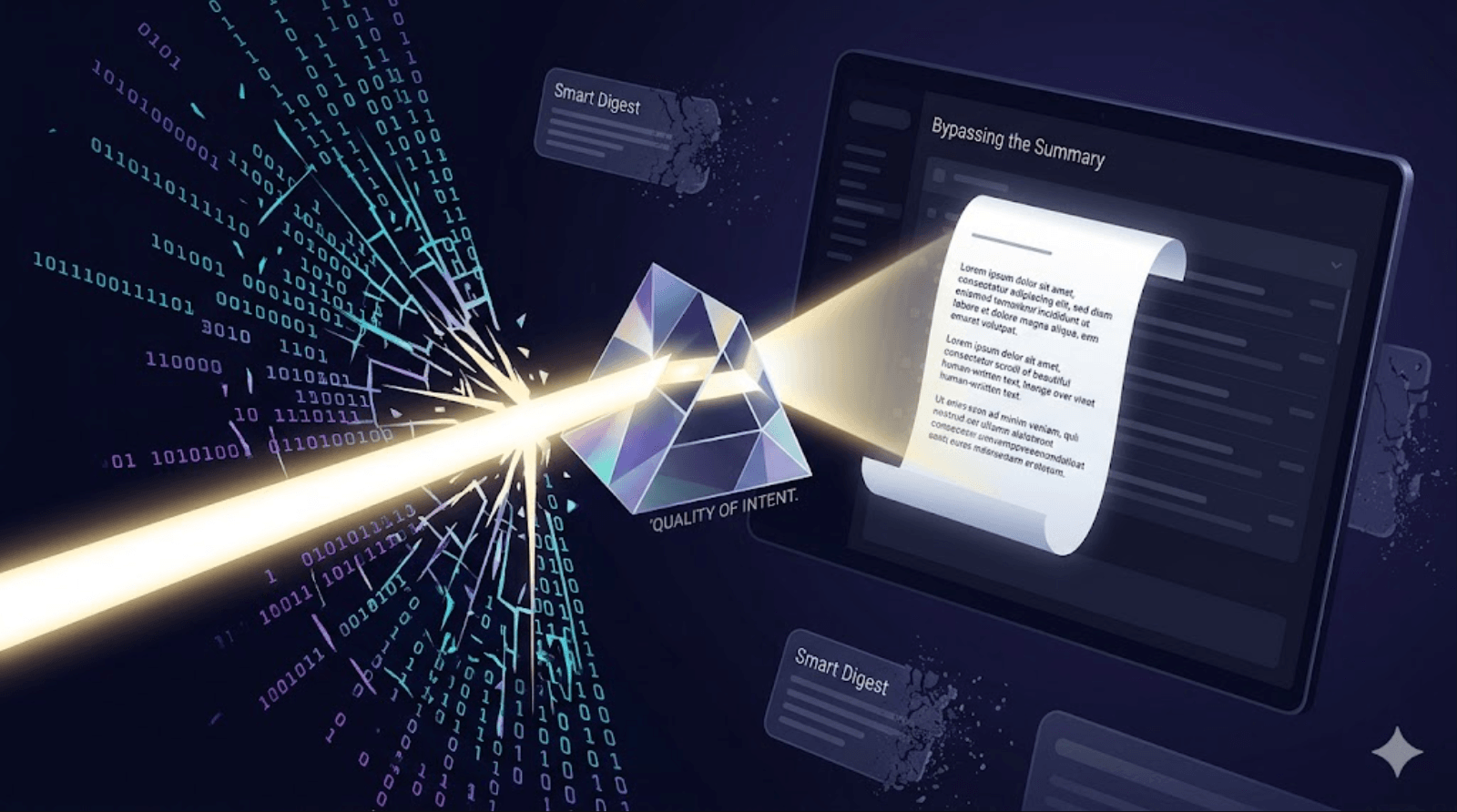
The Mechanical Gatekeeper: Why Your Best Work is Dying Unread
In 2026, the inbox is no longer a list of messages; it is a feed of “Key Takeaways.”
Modern AI filters operate as a layer of Mechanical Scrutiny. When your email hits a Gmail or iCloud server, the AI doesn’t just look for spam triggers; it performs a Semantic Analysis. It asks: “Is this message worth 15 seconds of my human’s life?”
The Reality Check: Last week, I ran a small experiment. I blasted a high-value technical audit to a segment of my own list. The content was pure gold—data no one else has. But the HTML template was heavy, full of design bells and whistles. The result? My “Open Rate” spiked, but my click-through was abysmal.
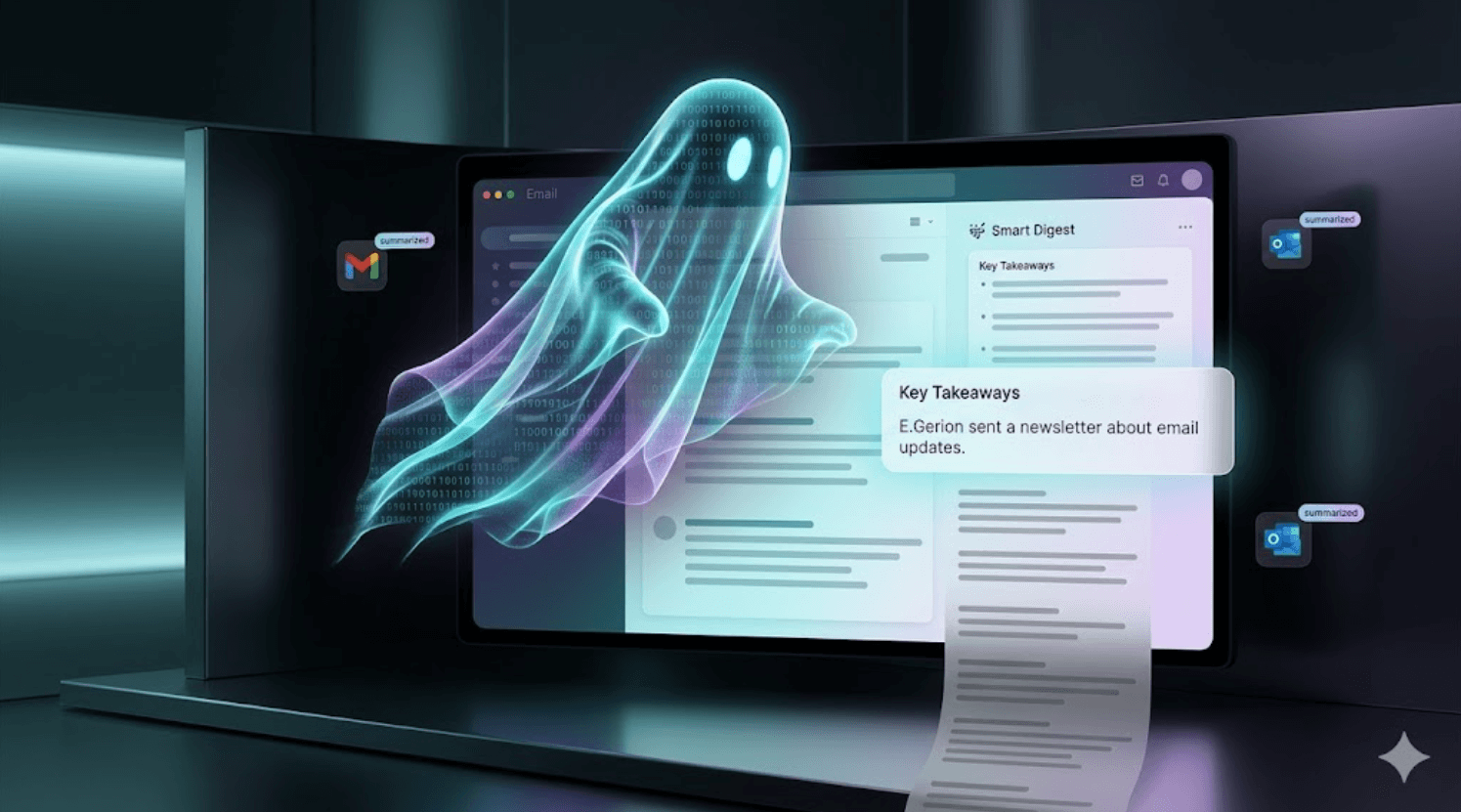
I found out why when I caught a glimpse of how Gemini summarized that email for a colleague: “E.Gerion sent a newsletter about email updates.” That was it. My 2,000-word deep dive was murdered by a ten-word bland summary. The subscriber didn’t even bother scrolling—they thought they already knew the “gist.” My hard work was reduced to a boring notification. This is how the Ghost operates.
If the AI decides your content can be stripped down to a boring sentence, it hides your entire high-production HTML behind a “Smart Digest” wall. You get a Ghost Open (the AI opened it to scan it), but your conversion rate remains at absolute zero.
Semantic Penalties: The New Shadow Ban
The most dangerous update of 2026 is the Semantic Penalty. If the AI identifies your emails as “Low Value” or “Repetitive,” the gatekeeper doesn’t just hide that specific message. It applies a permanent reputation penalty to your domain.
If the AI summarizes your last three newsletters as “More marketing fluff,” it eventually stops summarizing you altogether. You are moved to the “Background Noise” folder—the 2026 evolution of the Spam folder, and arguably more invisible because it’s filtered out by the user’s primary AI interface.
Survival Checklist: How to Bypass the "Ghost"
Survival Checklist: How to Bypass the "Ghost"
You cannot fight the machine, so you must feed it what it wants. To reach the human, you must first satisfy the AI.
JSON-LD for Email (Micro-data): You must implement schema.org markup. The AI needs to parse your data directly from the code, not guess from your copy. Verify your schema via Google’s Rich Results Test for Email to ensure the robots see your content exactly as intended.
The “Summary-First” Preheader: Stop using the preheader for clickbait. Use it for a Truthful Executive Summary. The AI uses the first 100 characters to determine the “vibe.” If the AI detects a mismatch between the preheader and the body, it triggers a Semantic Penalty.
Plain-Text Dominance: Heavy HTML is a signal for “Marketing Noise.” In 2026, clean, text-heavy emails are categorized as “Personal” or “Professional,” bypassing the aggressive summarization filters that target heavy design.
Technical Hygiene: As we dissected in our Technical Manual for SPF/DKIM/DMARC 2026, a missing 2048-bit signature or an insecure
p=nonepolicy is an automatic trigger for the AI to flag you as “Low Trust.”
⚠️ Urgent Update: Outlook “Copilot-Strict” Mode
Rumors from the latest Microsoft 365 Insider builds suggest a new “Strict” mode for Copilot. If enabled, it won’t just summarize your email—it will automatically move anything categorized as “Promotional Semantic” to a deferred delivery queue. This means your time-sensitive “Flash Sale” or “Last Call” offers might arrive 24 hours late.
Honest Verdict: Adaptation or Oblivion
Should you panic? Only if your business model relies on tricking people into clicking.
The “Ghost in the Inbox” is not a glitch; it is the final evolution of the email ecosystem. AI-summarization is the ultimate quality filter. In 2026, there are no shortcuts. You cannot “hack” a Gemini summary or “cheat” an Apple Intelligence digest.
The cold truth: I’ve seen firsthand how this technology guts my reach. If your content is so thin that it can be reduced to a three-word summary—you don’t deserve the open. Survival in 2026 requires a shift from tracking Open Rates to measuring Quality of Intent. You must write emails that are so vital that the AI has to tell the user: “You need to read this entire message.” Either you become a source of essential intelligence, or you remain a ghost in a machine that has already forgotten you exist.
📚 References & Technical Sources (April 2026):
Apple Developer Docs: Predictive Summarization and Mail Intent in iOS 19.
Google Cloud AI Blog: Semantic Filtering and Smart Digest Protocols for Gmail.
E.Gerion Reviews: Email Authentication 2026: The SPF, DKIM, and DMARC Technical Manual
E.Gerion Reviews: BIMI is No Longer Free: The Hidden Cost of Your Logo in 2026