

PCI DSS v4.0 & DMARC: How Broken Email Security Will Freeze Your Payment Gateways in 2026

Marketers still think email security is about hitting the inbox. It isn't. In 2026, your DNS config is a financial compliance vector. Miss a DMARC policy, and your payment gateway will freeze your merchant account. It is a mechanical certainty.

PCI DSS v4.0 shifted domain spoofing from an IT annoyance to a critical payment vulnerability. If your infrastructure leaks phishing emails, Stripe and PayPal will cut your cash flow to limit their liability. This is a breakdown of the exact sequence that turns a loose DNS record into a frozen bank account.

PCI DSS v4.0 DMARC


The 2026 Reality: Why Stripe and PayPal Care About Your DNS

For a decade, SPF and DKIM were treated as deliverability hacks. That ended with the PCI DSS v4.0 rollout. The standard now requires rigid anti-phishing and anti-spoofing controls for any entity touching payment data.

Payment processors do not care about your newsletter open rates. They care about risk exposure. If a bad actor can easily spoof your domain to send fraudulent invoices, your merchant account is flagged as a compromised asset. Gateway risk assessment algorithms now factor in domain authentication. If your infrastructure is open, you are a liability to the payment network.

The "p=none" Trap: Why Your Current DMARC is Useless
PCI DSS v4.0 DMARC

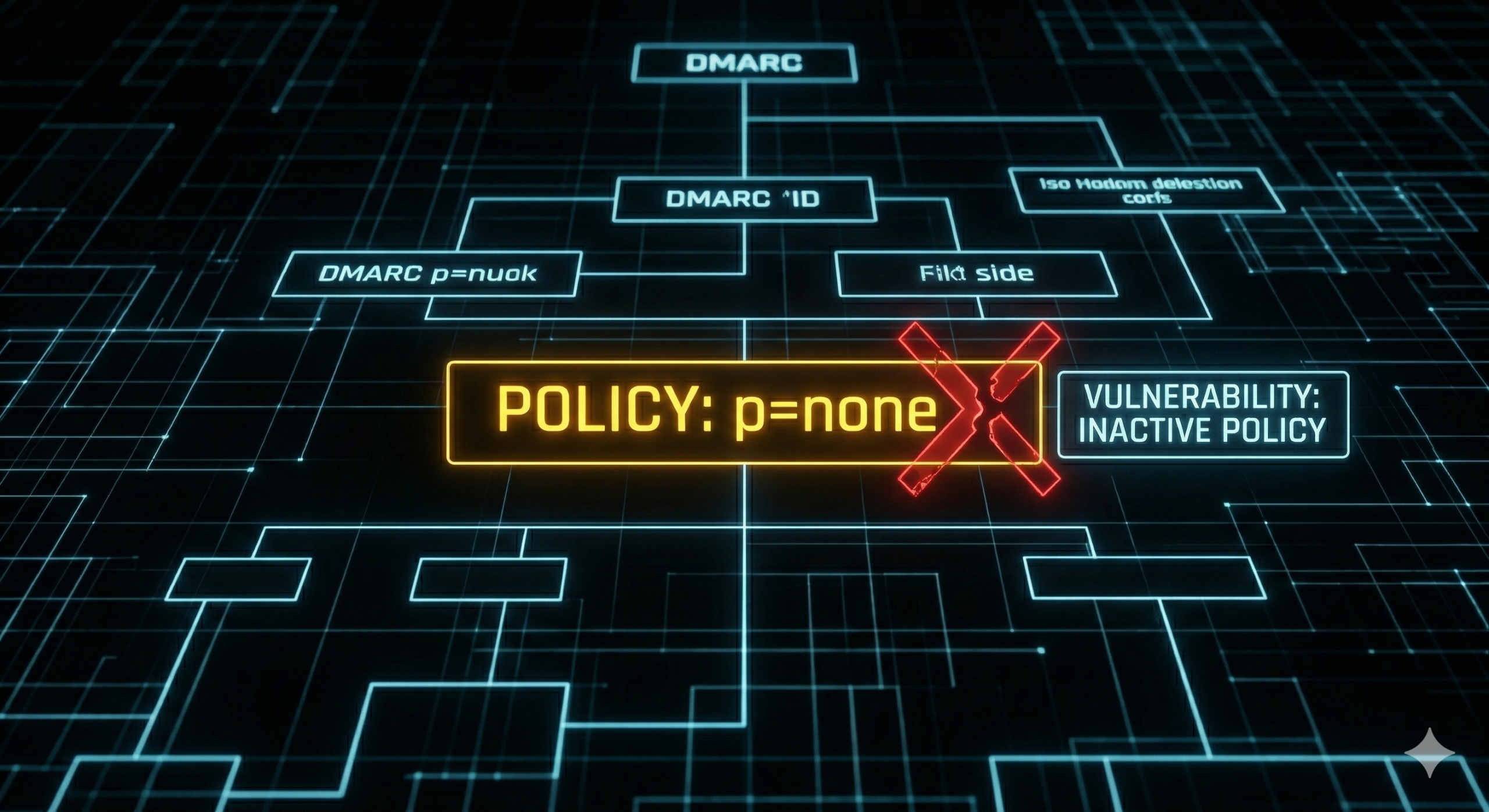
Most domains have a baseline DMARC record: v=DMARC1; p=none;. This is a placeholder. It tells receiving MTAs you are monitoring traffic, but explicitly instructs them to deliver failing messages.

You are logging the spoofing, not stopping it. In 2026, auditors view p=none as negligence. You know the door is unlocked, but you refuse to shut it. Gateways and major inbox providers now mandate enforcement. You need p=quarantine or p=reject. Everything else is an unacceptable risk.

The Domino Effect: How the Financial Freeze Actually Happens

A frozen bank account does not happen randomly. It follows a predictable sequence of infrastructure failures:

  1. The Spoof: Your domain is sitting on p=none. A syndicate exploits the open policy, spoofing your brand to push a fake billing update to 50,000 users.

  2. The Red Flags: Users flag the payload as phishing. Google and Apple algorithms log the abuse and blacklist the domain. As outlined in my SMTP 550 errors and Gmail red flags report, the block is absolute.

  3. The Compliance Audit: The sudden volume of phishing reports tied to your root domain trips automated risk triggers at your payment processor (Stripe, Braintree, PayPal).

  4. The Freeze: To maintain PCI DSS v4.0 compliance, the processor automatically suspends your merchant ID. Transactions halt. The freeze remains until you pass a security audit and prove your DNS is locked.

The E.Gerion Compliance Checklist: Bulletproofing Your Infrastructure

You do not wait for a Stripe suspension email to fix your DNS. You patch the vulnerabilities now.

1. Enforce Strict Alignment & 2048-bit Keys

1024-bit encryption is deprecated. Generate new 2048-bit DKIM keys. Force strict domain alignment. The visible “From” header must perfectly match the signing domain. Mismatches will trigger hard bounces.

2. Escalate to “p=reject”

Stop logging the attacks and drop the packets. Review your XML aggregate reports, authenticate your legitimate sending IPs, and escalate your policy to p=reject. This forces receiving servers to kill unauthorized mail at the edge.

3. Audit Your Third-Party Senders

Your perimeter is only as secure as the weakest vendor with API access. Audit every CRM, support desk, and marketing tool authorized to send on your behalf. My recent HubSpot vs ActiveCampaign 2026 technical showdown highlights why you must drop vendors that allow loose deliverability hygiene.


The Final Verdict: Security is the New Marketing

Email marketing metrics are irrelevant if you cannot process payments. A misconfigured DNS record is a direct threat to your revenue pipeline. Upgrade your keys, escalate to p=reject, and lock down your payment gateways. Do the work.