

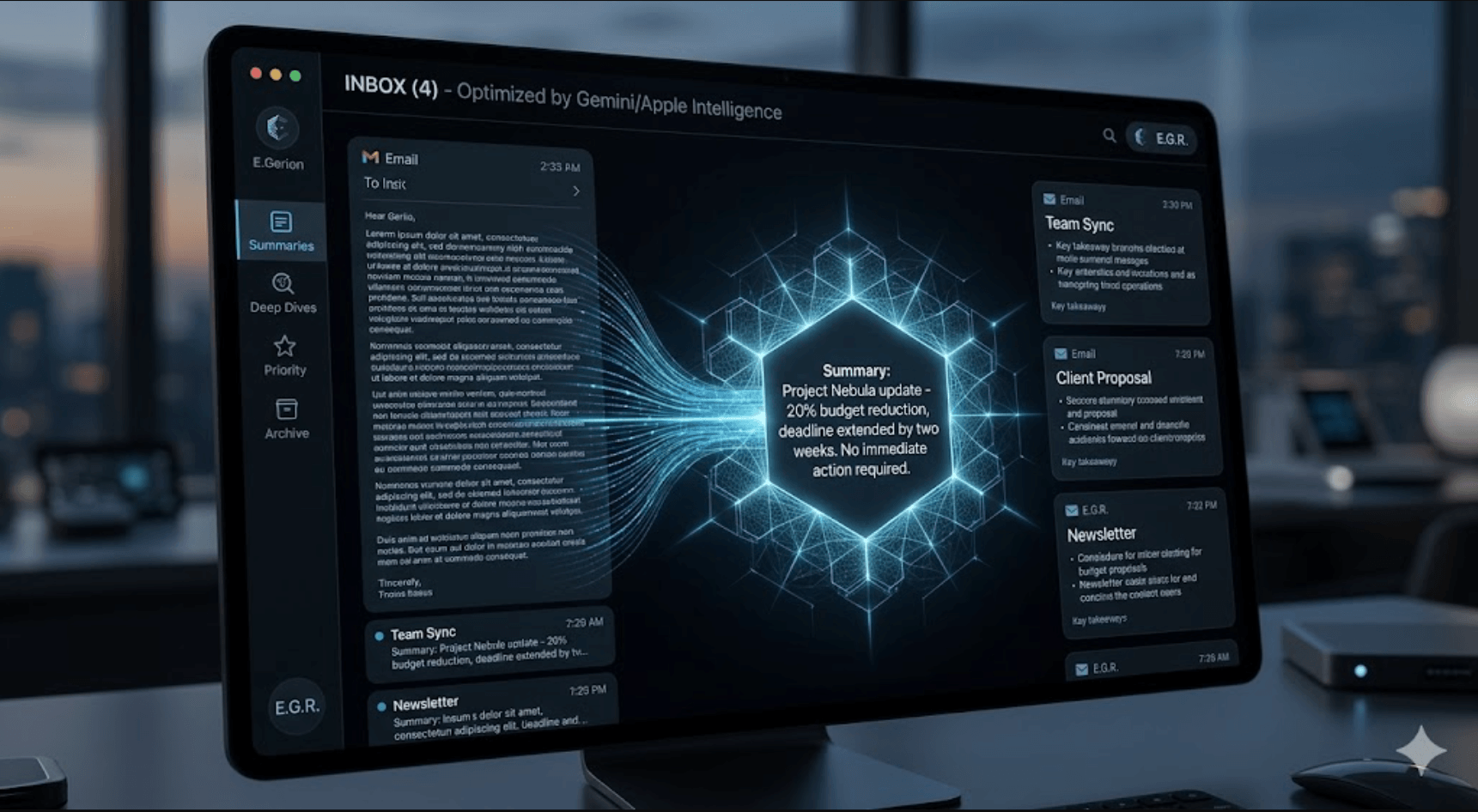
If your team is still debating preheader copy like it is 2022, stop. That is not strategy. That is office cosplay. In 2026, Gmail and Apple are increasingly mediating the inbox through AI-generated summaries, and your carefully polished teaser text is being treated like scrap metal.The first screen of the inbox no longer belongs entirely to the marketer. It belongs to the machine that reads your email before the subscriber does, extracts the useful parts, and strips out the fake suspense. If your message depends on hiding the point until paragraph three, the AI will drag the point into the open and display it in public like evidence.This is the mechanical shift too many brands still refuse to understand: you are no longer writing only for the reader. You are writing for the inbox model that decides how your message is summarized, framed, and mentally pre-filtered before the open even happens.
The 2026 Reality: Why the Old Preheader Playbook Is Broken
For years, email marketers treated the preheader as a second subject line. They stuffed it with curiosity bait, false mystery, and lazy urgency. That worked when inboxes displayed a predictable text snippet pulled from the first line of the email.
That environment is gone. In 2026, the inbox is increasingly machine-mediated. Apple Intelligence and Gemini-powered Gmail experiences are pushing email toward summary-first consumption. The inbox is no longer a raw list of messages. It is becoming an interpreted interface.
This breaks the old playbook for one simple reason: AI does not respect marketer theater.
- It does not care about your “you won’t believe this” preheader.
- It does not care about soft clickbait hidden above the fold.
- It does not care about your dramatic pacing.
- It wants the factual payload of the email.
If your offer, discount, announcement, or update is buried under fluffy storytelling, the AI will often extract the real point anyway. The result is brutal: your “mystery” disappears, but the weak writing remains.
Why It’s Broken: How AI Actually Interprets Your Email
Most marketing teams still write as if a human is the first parser. In 2026, that assumption is amateur hour.
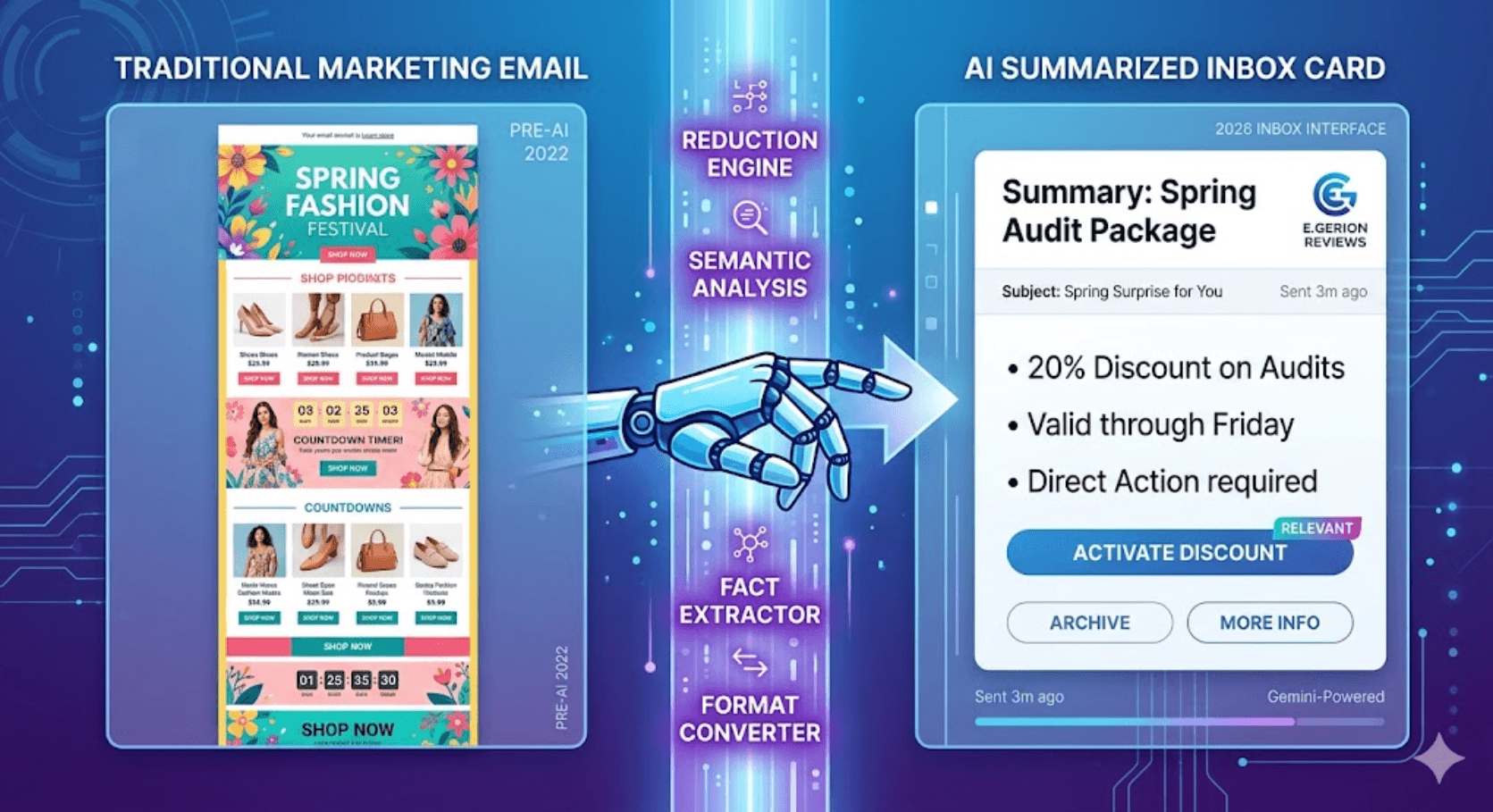
AI email summary systems are trained to identify the semantic core of a message. They scan for nouns, verbs, product references, dates, discounts, changes, and action points. They are not emotionally invested in your brand voice. They are reduction engines.
The Machine Does Not Read Like a Human
A human may tolerate a vague opening if they already trust your brand. An AI summary model does not. It scans the body and pulls what looks materially useful.
If your email opens with generic filler like this:
Hey, we have something exciting to share...
the model keeps scanning.
If the next section says:
Our spring audit package now includes a 20% discount through Friday.
that becomes the likely summary payload.
The machine discards the performance and keeps the substance.
Curiosity Gaps Are Getting Flattened
This is where weak email teams get exposed. The old tactic was simple: hide the offer, bait the open, reveal the details later. In a summary-driven inbox, that structure collapses.
Instead of:
- Subject: A little surprise for you
- Preheader: Open this before midnight…
the user may effectively see:
- AI Summary: This email offers a limited-time discount on your next purchase.
Now the decision is immediate. If the offer is relevant, you win. If it is generic junk, you get ignored faster. That is not a bug. That is the market finally punishing vague email copy.
False Urgency Gets Exposed
AI summaries also punish fake urgency. If your subject line screams “ACTION REQUIRED” and the body is just a blog roundup or a thin sales nudge, the summary layer can neutralize the manipulation by describing the email for what it is.
That means one thing: alignment between subject, body, and actual value is no longer optional. It is structural.
The Mechanical Breakdown: What Changes in Performance and Strategy
There is no credible way to claim exact universal weekly open rate or CTR benchmarks from the provided dataset, so let’s not play vendor fantasy football. What the available material does confirm is more interesting anyway: the inbox is shifting from teaser-driven behavior to summary-driven filtering.
That creates three mechanical consequences.
1. Weak Emails Lose Before the Open
Low-value campaigns used to survive on subject-line tricks. Now they are being pre-screened more aggressively by machine summaries and machine classification.
If the summarized value is thin, the user has less reason to open. The inbox itself has already done part of the evaluation.
This means generic newsletters, “checking in” emails, and filler promotions are not just underperforming. They are becoming deliverability dead weight. In a 2026 environment shaped by AI filters and privacy pressure, repeated low-engagement sends train both users and systems to treat your domain as ignorable.
2. Strong Emails Become Easier to Qualify
The upside is just as clear. A genuinely useful email now has a chance to benefit from AI interpretation. If the first paragraph states a concrete offer, benefit, or update, the summary can work like free ad copy inside the inbox.
That is the new game: write emails whose summarized version still sells the open.
Good example:
- Specific product or content asset
- Concrete benefit
- Time condition if real
- Clear audience relevance
Bad example:
- Vague emotional intro
- Delayed point
- Artificial mystery
- No immediate reason to care
3. The First Paragraph Is Now an Inbox Asset
In old email logic, the first paragraph supported the message. In 2026, it also supports the machine’s summary layer. That makes it one of the highest-leverage blocks in the entire email.
If your first 60 to 120 words are empty, the model will search deeper and potentially build a summary from fragments you did not intend to feature. That is how brands lose framing control.
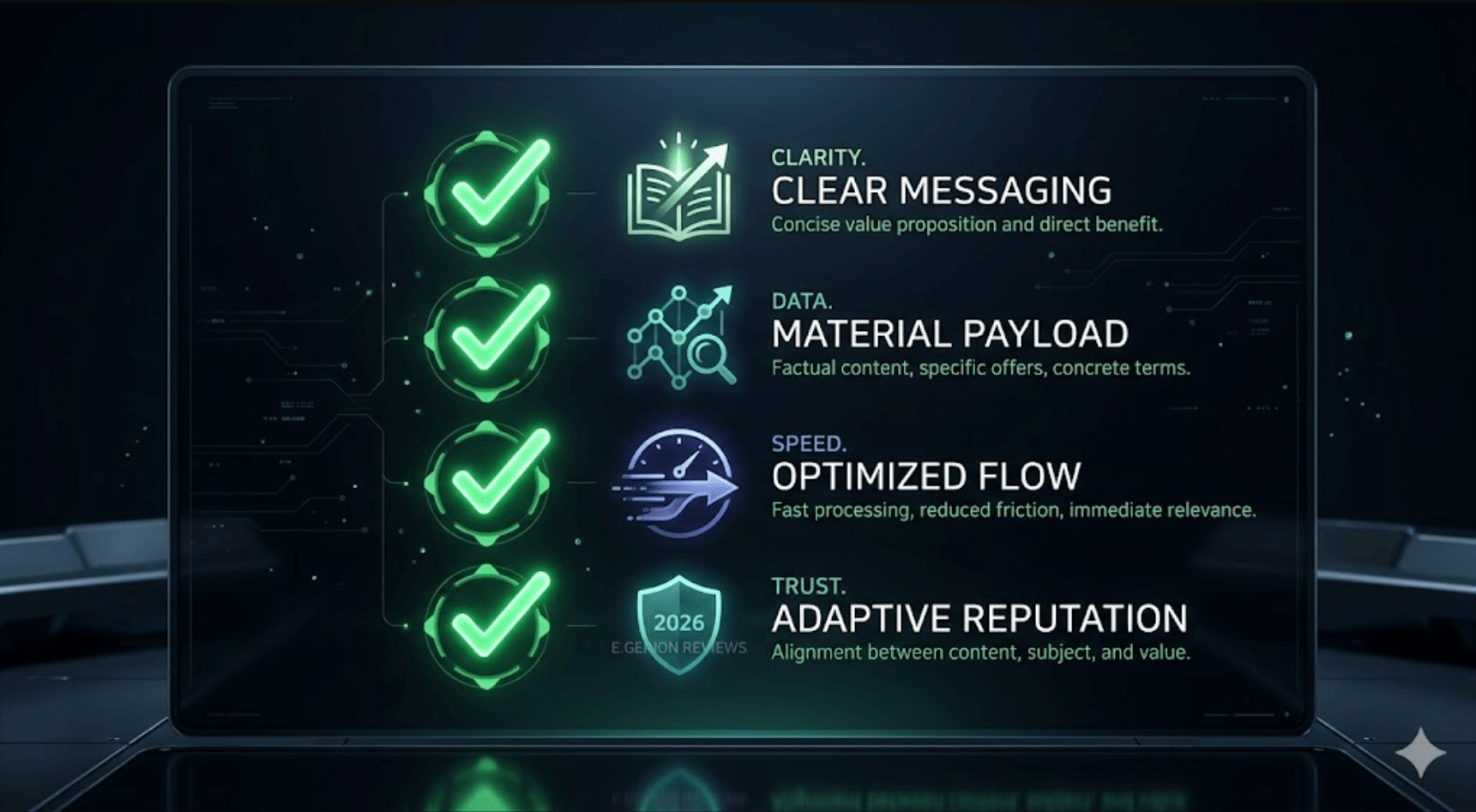
The first paragraph now needs to do four jobs at once:
- Establish relevance for the subscriber
- Provide machine-readable factual clarity
- Align with the subject line
- Reduce ambiguity for summary engines
If it does not, your message enters the inbox handicapped.
The New Rules: How to Write for AI-Summarized Inboxes Without Sounding Like a Robot
This is where most teams embarrass themselves. They hear “AI summaries matter” and start writing sterile copy for the machine instead of the human. That is not adaptation. That is surrender.
The goal is not to write for the AI. The goal is to write clear, high-value emails that survive AI interpretation.
Rule 1: Put the Payload Up Front
Lead with the actual point. Not your mood. Not your brand diary. Not a fake warm-up paragraph.
Bad opening:
Hope your week is going well. We have been working on something exciting behind the scenes.
Better opening:
We just published our 2026 guide to AI email summaries in Gmail and Apple Mail, including the structural changes hurting open rates and what to fix this quarter.
The second version gives both the subscriber and the machine something usable.
Rule 2: Use Machine-Readable Specificity
AI summaries tend to reward concrete language. Specific terms outperform vague ones.
- Use product names
- Use dates
- Use real offers
- Use measurable claims only when you can support them
“Something helpful for your business” is empty calories. “A checklist for fixing AI summary visibility in Gmail and Apple Mail” is legible value.
Rule 3: Stop Burying the Offer Under Storytelling
Storytelling is not dead. Bad sequencing is.
If you want to use narrative, state the value first and then expand. In 2026, long-winded openings are not charming. They are operationally stupid. The machine will skip them, and the reader probably will too.
Rule 4: Structure Matters More Than Your Copywriter’s Ego
Clear hierarchy helps both AI systems and humans.
- Short paragraphs
- Descriptive headers
- Bullet points
- Front-loaded facts
This is not about making the email “pretty.” It is about making the message interpretable. If your copy is a wall of mush, the machine has to guess. Guessing is where bad summaries happen.
Rule 5: Do Not Build Emails “For AI Summary” Alone
This is the anti-trend that deserves ridicule. Some teams are now over-optimizing for the summary layer and forgetting the person behind the screen.
That produces flat, synthetic emails that read like compliance memos. Yes, the AI may summarize them accurately. No, the human will not care.
The correct standard is simple: make the value explicit enough for the machine and sharp enough for the buyer.
The Strategic Risk: Why Lazy AI Content Will Hurt More in 2026
The provided material also points to a second problem: careless AI-generated content. This is where mediocre brands torch trust and call it innovation.
In 2026, AI helps with production, timing, segmentation, and optimization. Fine. That is useful. But when teams let unedited AI sludge hit the inbox, they create the exact signals modern filters and users hate:
- generic phrasing
- repetitive structure
- empty claims
- manipulative urgency
- zero human judgment
This is not just a copy issue. It is a reputation issue. If your content feels machine-made and low-value, engagement drops. Once engagement drops, your sender reputation absorbs the damage. Once that damage compounds, your next campaign starts lower in the trust stack.
That is why “AI can write our emails now” is one of the dumbest executive conclusions of the year. AI can accelerate production. It cannot replace discernment, positioning, or genuine audience understanding.
What Smart Teams Should Do Now
If you want to survive AI-mediated inboxes in 2026, stop treating this like a cosmetic copy tweak. It is an infrastructure-level content change.
The E.Gerion Fix List
- Rewrite first paragraphs so the main value appears immediately.
- Audit subject-to-body alignment to remove fake urgency and mismatched framing.
- Kill vague preheaders that depend on mystery instead of relevance.
- Use AI for analysis and optimization, not for publishing unedited filler.
- Structure emails for interpretation with clear hierarchy, factual openings, and concise formatting.
- Test summary resilience by asking a simple question: if a machine summarized this message in one sentence, would that sentence still earn the open?
A Practical Internal Test
Before sending any campaign, run this drill:
- Take the subject line
- Take the first 120 words
- Write the one-sentence summary an AI would likely generate
If that sentence is vague, weak, or exposes a boring offer, the problem is not the algorithm. The problem is your email.
The Verdict
The preheader-first era is over. AI summaries in Gmail and Apple Mail are turning the inbox into a machine-interpreted environment, and weak email copy is getting stripped for parts before the open.
Stop writing like a teaser artist. Start writing like someone selling to both a human and a summarization engine. Put the value first. Make the structure clean. Use AI as a tool, not as a ghostwriter with no standards.
If your first paragraph cannot survive machine interpretation, your campaign is already losing. Fix it now.
📚 References & Sources
- Goodbye, Preheader: Why AI Summaries Are Rewriting the Rules of Your Email’s First Screen – E.Gerion Reviews analysis of Apple Intelligence and Gemini changing inbox preview behavior.
- Google Workspace Blog: Gemini in Gmail, Docs and more – Official Google source on Gemini expansion inside Gmail and related products.
- Google Gmail Blog – Official Gmail product updates relevant to AI-assisted inbox experiences.
- Apple Newsroom – Official Apple announcements and platform updates, including Apple Intelligence direction.
- HubSpot State of Marketing – Industry benchmark source on AI adoption and marketing workflow changes.