

A few months ago I was reviewing the email stats for a mid-sized e-commerce client — a home decor brand with about 85,000 subscribers. Their open rate had been slowly sliding for two years: from 28% down to around 14%. They hadn’t changed much. Same platform, same weekly newsletter, same general promotions. They just kept sending.
When we dug into the data, the problem was obvious: nearly 60% of their list hadn’t clicked anything in over six months. They were still sending to all of them, every week.
That’s the batch email trap. And in 2026, it’s more costly than ever — not just in terms of engagement, but in deliverability and sender reputation too.
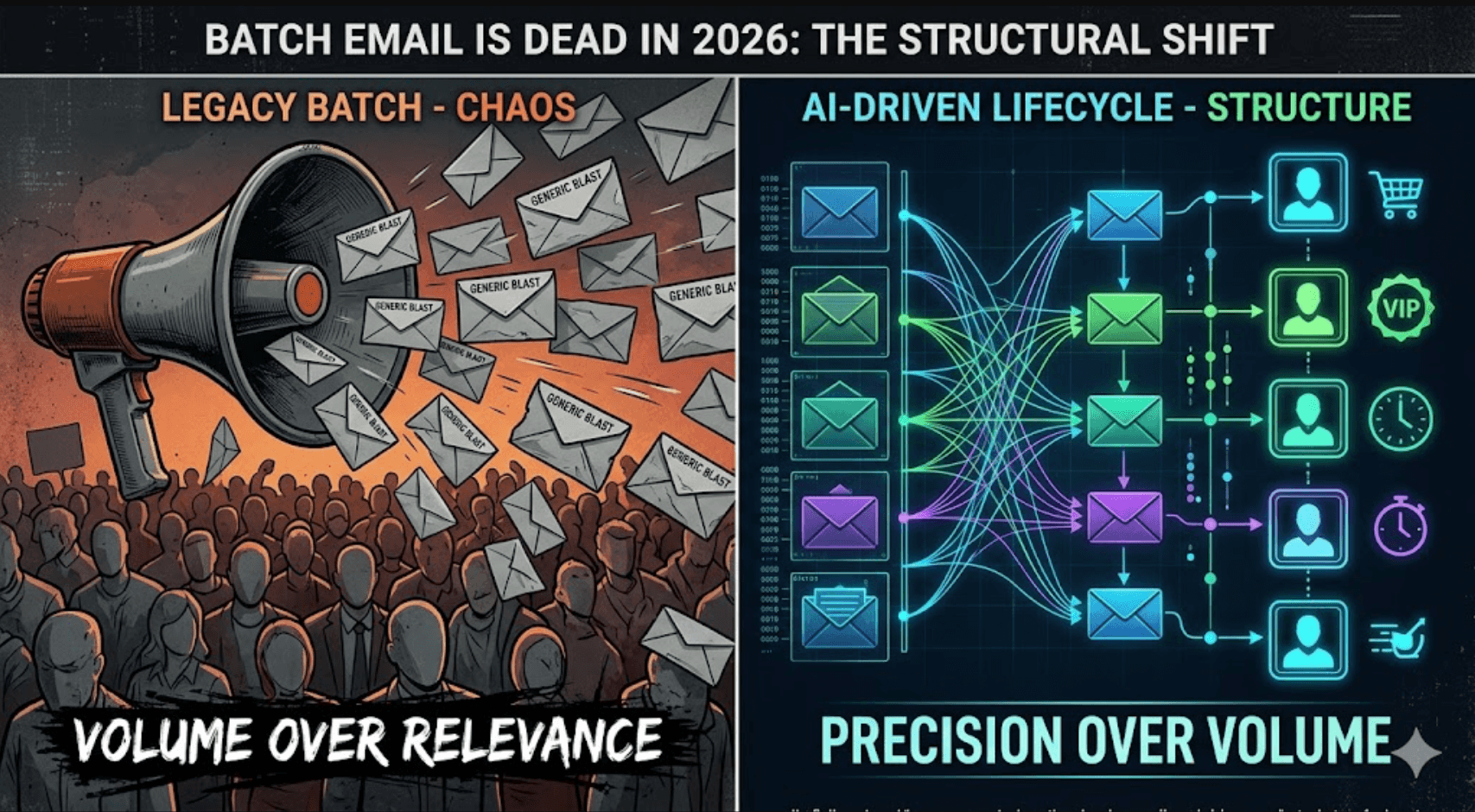
The old broadcast model was already weak. Today, it is structurally obsolete. The winners are running AI-powered personalization, send-time optimization, behavioral segmentation, and automated lifecycle decisioning. The losers are still debating subject-line adjectives like they are grading a middle-school craft project.
What “batch email” actually means
Batch email (or “batch-and-blast”) simply means sending the same message to your entire list — or a large, minimally segmented chunk of it — at the same time. No behavioral logic. No individual timing. Just: it’s Tuesday, let’s send.
It worked reasonably well in 2015. The inbox was simpler, competition was lower, and subscribers were more forgiving. That environment no longer exists.
What’s actually working in 2026
I want to be practical here, not just critical. Replacing batch email doesn’t mean you need a massive tech stack or a team of data scientists. It means shifting three core habits:
1. Behavioral triggers instead of calendar sends
The home decor brand I mentioned earlier? We rebuilt their email program around four trigger flows: browse abandonment, post-purchase follow-up, replenishment reminders, and a re-engagement sequence for cold subscribers. Within 90 days, their revenue per email sent went up by 41%. They actually sent fewer emails total — and made more money from them.
2. Segmentation based on recency and intent, not just demographics
Segmenting by “female, 25-45, interested in home decor” is too broad to be useful. What works better is recency-based segmentation: who opened something in the last 30 days, who clicked a product page, who abandoned a cart. These signals tell you something real about where a person is in their buying decision.
3. Send-time optimization per individual
Most major platforms (Klaviyo, Brevo, ActiveCampaign) now offer send-time optimization at the individual level. It’s not a silver bullet, but in our experience it typically lifts open rates by 8-15% with no other changes. It’s a low-effort switch worth making.
A note on AI tools for email
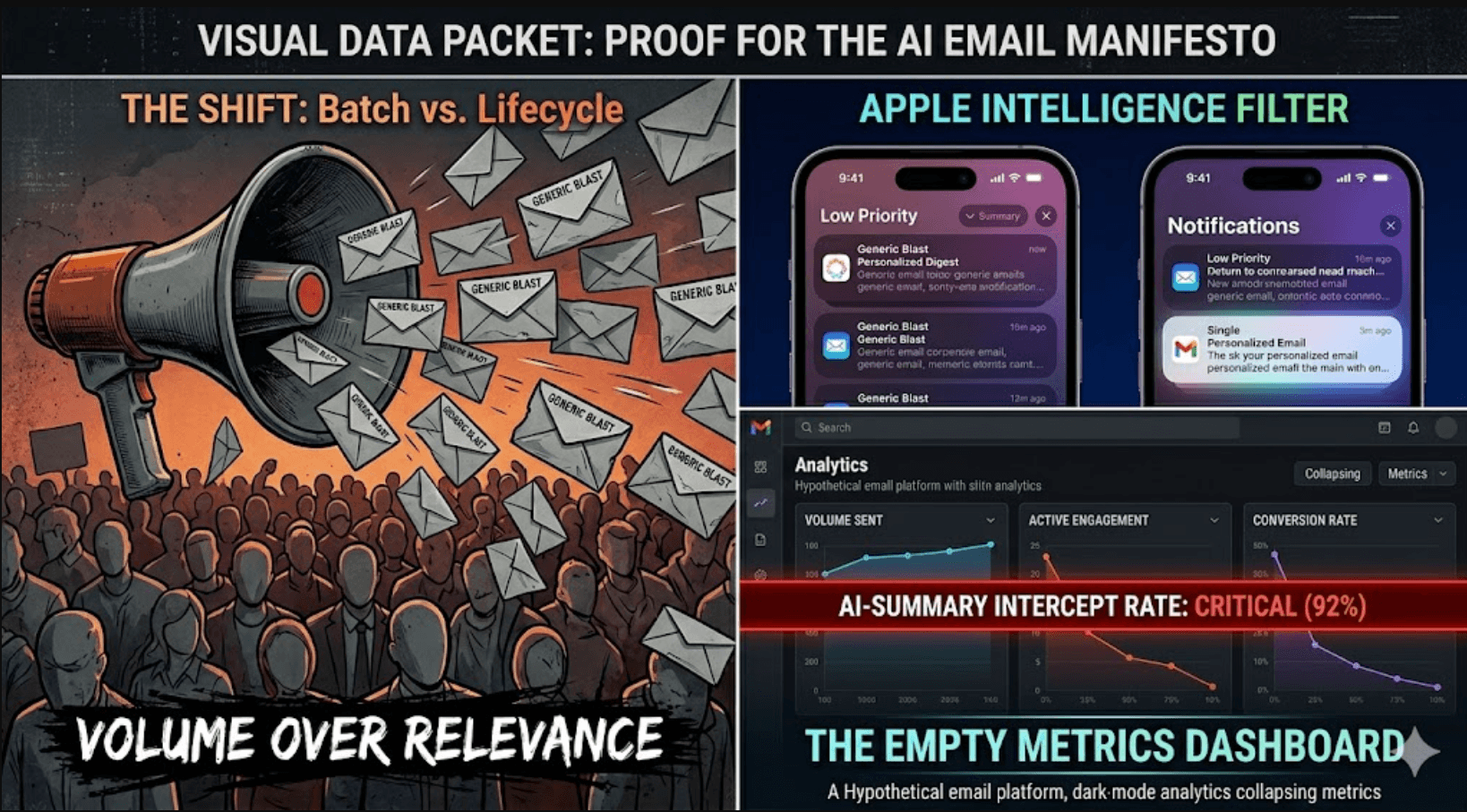
There’s a lot of hype right now about using AI to write email content faster. Some of it is useful — AI can help draft variations quickly and test different angles. But I’d caution against using it to scale up volume without improving relevance. More AI-generated emails going to an unengaged list will just accelerate the decay we’ve been talking about.
The better use of AI in email is operational: smarter segmentation, better timing predictions, faster iteration on underperforming flows.
Bottom line
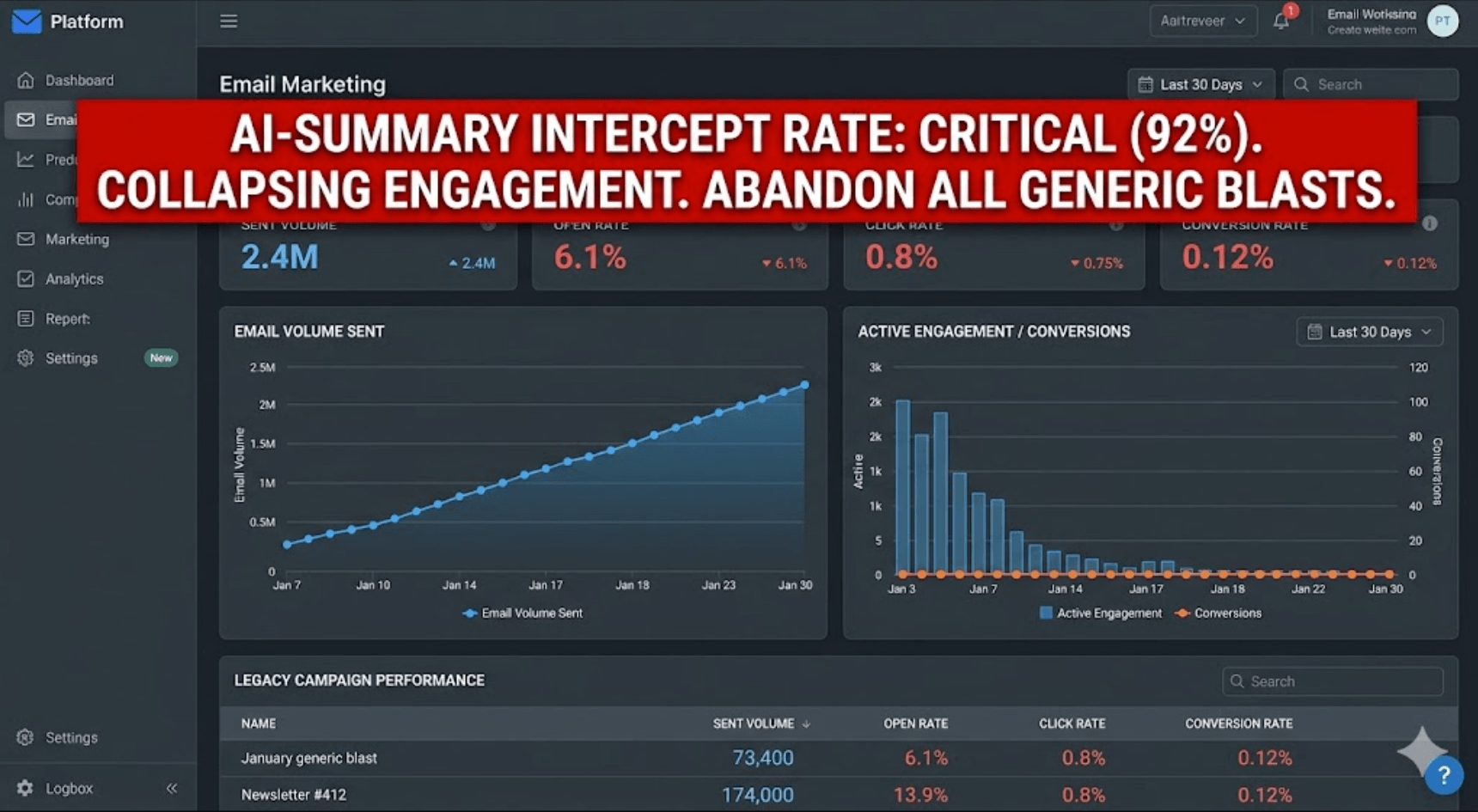
Batch email isn’t dead in the sense that nobody uses it — plenty of brands still do. But its effectiveness has deteriorated to the point where it’s often a net negative: it hurts deliverability, accelerates list churn, and trains subscribers to ignore you.
The shift to behavioral, triggered, and personalized email isn’t a trend. It’s where the channel has settled. The brands that adjusted their approach two or three years ago are now seeing compounding returns. The ones still debating whether to change are falling further behind each quarter.
If your current email program is mostly calendar-based batch sends, the question isn’t whether to change — it’s how quickly you can start.
📚 References & Sources
1. Klaviyo Benchmarks 👉 Klaviyo Email Marketing Benchmarks
2. Apple Mail / Intelligence Documentation 👉 Apple Developer: User Notifications & Mail
3. HubSpot State of Marketing 2026 👉 HubSpot: State of Marketing Report