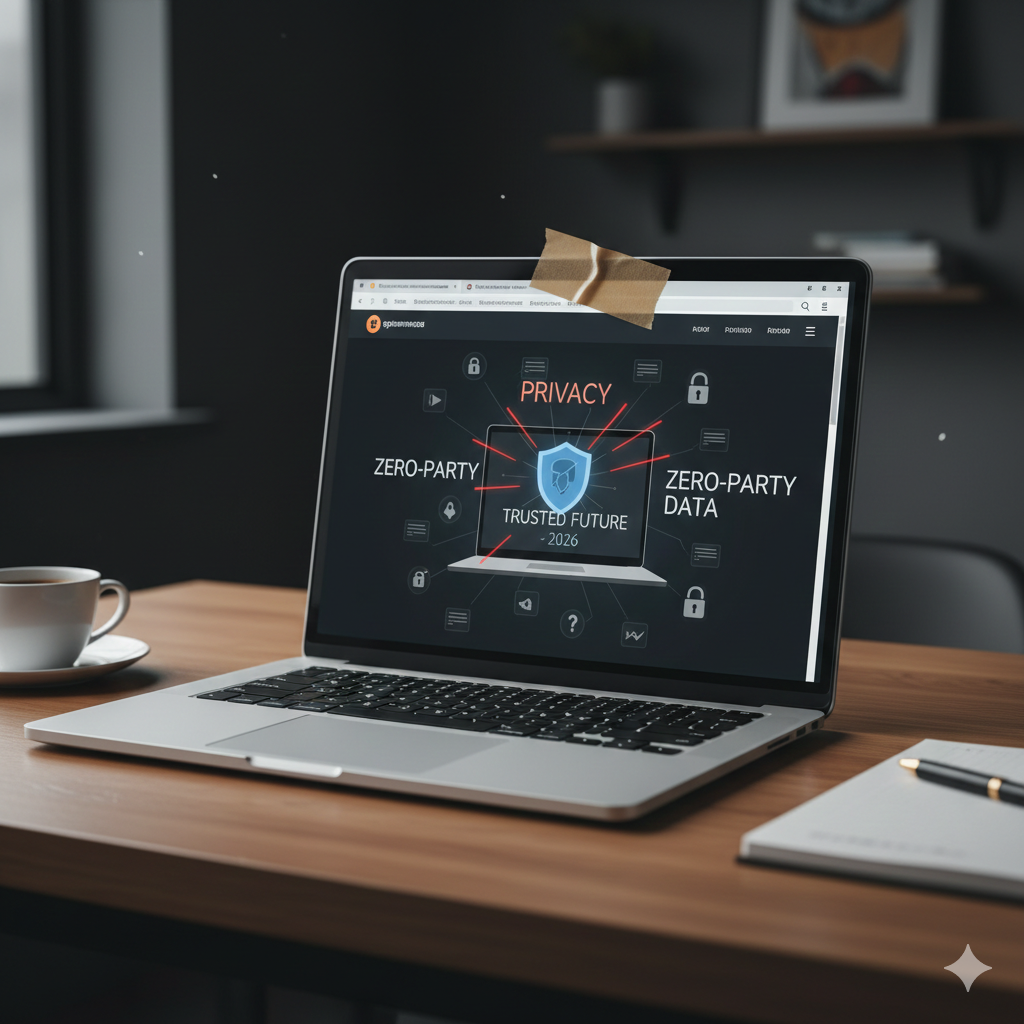
Let’s be real: in 2026, people are finally fed up with algorithms knowing more about them than they know about themselves. We’ve all gotten used to “smart” personalization, which is really just legal surveillance. But to be honest, when I get an email with an offer for something | just thought about, I don’t want to buy it; I want to tape over my laptop camera. That’s not personalization; that’s creepy.
My recent post on “Personalization vs. Privacy” laid a great foundation, but it’s time to dig deeper. In an era where privacy is becoming the new currency, marketers need to rethink their approaches. And that’s where Zero-party Data comes in.
What is Zero-party Data? My honest thoughts.
Zero-party Data is information that a customer intentionally and proactively shares with a brand [1]. This isn’t something you collect through cookies or website behavior tracking.
It’s information users voluntarily provide because they trust you and expect something valuable in return. This could be information about preferences, purchase intentions, personal contexts, or how they want the brand to interact with them [2].
Key takeaway: This is a shift from “I’m watching you” to “Tell me what you need, and I’ll help.” It’s about an open dialogue with your subscribers and how to stop being a “creepy marketer” and become a “helpful expert.”
Why is Zero-party Data so important in 2026?
- Trust and Transparency: With growing privacy concerns, brands that openly ask for information build stronger customer relationships. People appreciate being asked, not spied on [3].
- High-Quality Data: Since data is provided voluntarily, it tends to be more accurate and up-to-date. This allows for truly relevant and personalized offers [4].
- Regulatory Compliance: With stricter privacy laws (GDPR, CCPA), collecting Zero-party Data reduces compliance risks because the data source and collection method are transparent [5].
Improved Personalization: By knowing customer preferences directly, you can offer products, services, and content that genuinely interest them, leading to increased engagement and conversion.
How to Implement This Without the Fluff
Let’s be real, nobody wants to complicate their life. Here are concrete steps for small businesses to start collecting Zero-party Data:
- Surveys and Quizzes: Instead of guessing, send a short survey: “What should I write about next week?” or “Which product interests you most?” Interactive quizzes can be a great way to gather preferences while offering value in the form of personalized recommendations [7].
- Preference Centers: Allow subscribers to manage what content they want to receive and how often. This can be a simple page on your website where they can choose topics of interest or email frequency.
- Onboarding: Welcome emails or registration forms can include questions about a new user’s goals, interests, or preferences. This immediately sets a tone of open dialogue.
- Gamification: Use game elements, such as contests or quizzes, to make the data collection process more engaging and encourage users to share information [8].
Tools: What’s Available on the Market for Collecting Zero-party Data
My honest thoughts: no need to reinvent the wheel. Many existing tools already offer functionality for collecting Zero-party Data. Here’s what’s worth testing:
- Survey and Quiz Platforms:
- Typeform: Known for its beautiful and interactive forms and quizzes that make the data collection process enjoyable for the user [9].
Qualtrics: A powerful research platform that allows you to create complex surveys and analvze data [10].
- Google Forms: A free and easy-to-use tool for creating basic surveys.
- CRM and Marketing Automation Platforms:
- ActiveCampaign / HubSpot: These platforms not only allow you to create forms for data collection but also integrate them with your subscriber base for segmentation and automation based on collected preferences. You can use them to create preference centers and launch automated campaigns based on Zero-party Data.
- Specialized Tools:
- BlueConic: A Customer Data Platform (CDP) that actively promotes Zero-party Data collection and offers tools for its activation [11].
- mParticle: Another CDP that helps collect, unify, and activate customer data, including Zero-party Data [12].
Conclusion: Trust is the New Currency
In 2026, trust is the hardest currency. If you’re peeking instead of asking, you’re losing. The shift to Zero-party Data isn’t just a trend; it’s a fundamental change in the approach to marketing that puts the customer at the center. It’s an opportunity to build more honest, transparent, and ultimately, more profitable relationships with your audience.
Final thought: Don’t wait. Ask your subscribers right now what they’re interested in. Start building trust, and you’ll see it pay off. Reference
- https://www.qualtrics.com/articles/strategy-research/zero-party-data/
- https://www.okta.com/blog/industry-insights/what-is-zero-party-data-and-why-does-it-matter-now/
- https://www.bloomreach.com/en/blog/importance-of-zero-party-data
- https://www.braze.com/resources/articles/what-is-zero-party-data
- https://www.deloittedigital.com/us/en/insights/perspective/the-power-of-zero-party-data–zpd-.html
- https://www.salesforce.com/marketing/personalization/zero-party-data/
- https://www.digioh.com/blog/how-to-collect-zero-party-data-with-product-quizzes
- https://www.audience.io/blog/fun-ways-to-collect-zero-party-data
- https://www.typeform.com/blog/9-methods-collect-zero-party-data
- https://www.qualtrics.com/articles/strategy-research/zero-party-data/
- https://www.blueconic.com/resources/the-complete-guide-to-zero-party-data-collection
- https://scopicstudios.com/blog/best-zero-party-data-platforms/