

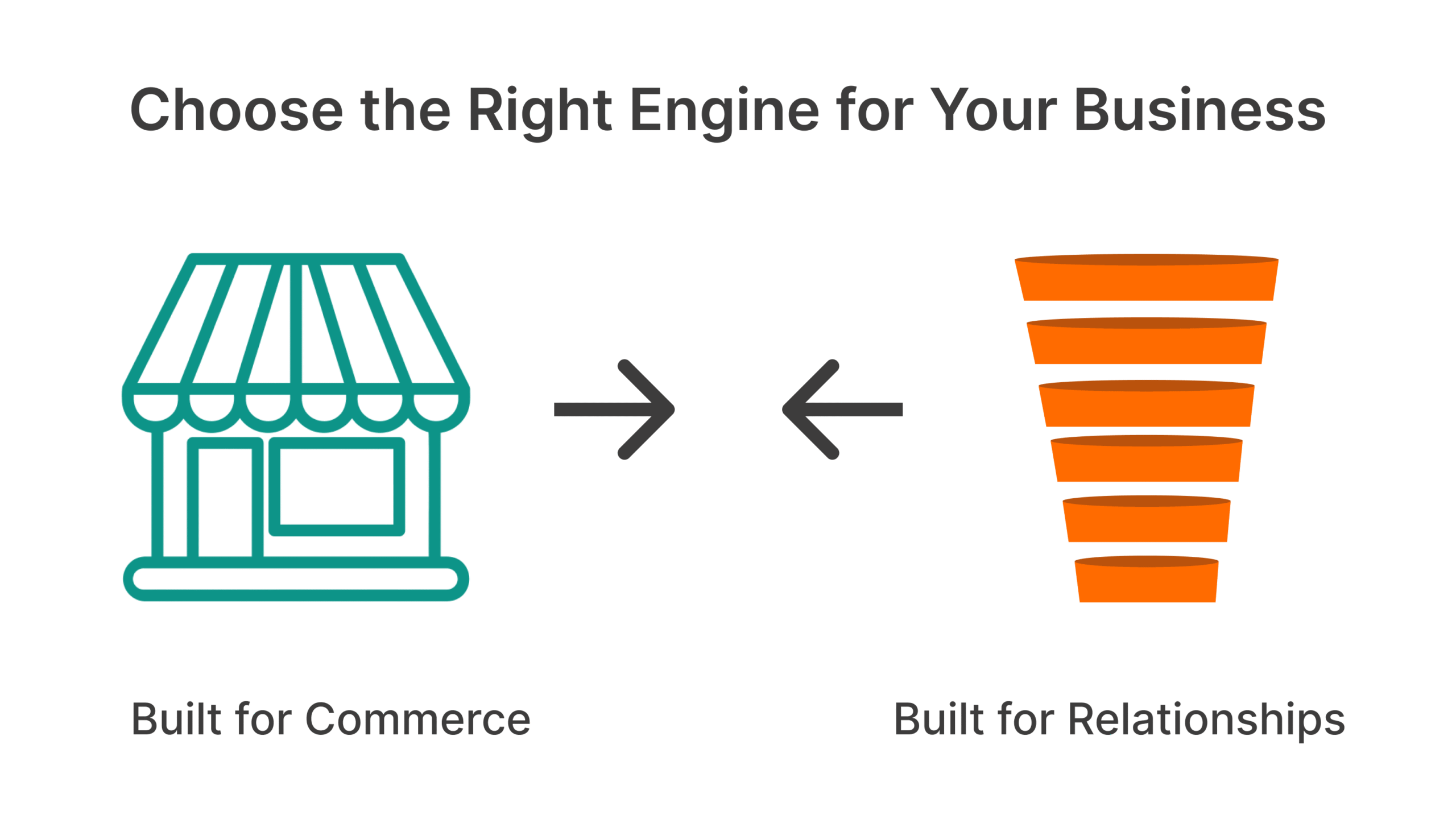
When evaluating ActiveCampaign vs Klaviyo, there’s a pattern I keep seeing, and it happens in both directions.
A DTC brand picks ActiveCampaign because a friend used it for their SaaS company, then spends three months trying to bolt ecommerce logic onto a platform that was never built to think in product catalogs and cart values.
And the reverse happens just as often. A B2B company with a webshop bolted on picks Klaviyo because “it’s the ecommerce one.” Six months later they’re paying for a CRM add-on, a separate lead scoring tool, and a landing page builder, because Klaviyo genuinely doesn’t have any of that.
Neither of these is a bad platform. Both are excellent, specifically, at what they were built for. The mistake is assuming “email marketing tool” is one category. It isn’t.
And picking the wrong one doesn’t just cost you money — it costs you months rebuilding automations you shouldn’t have built in the first place. Here’s the actual difference, without the sales page spin from either company.
Where Klaviyo Actually Wins (The E-Commerce Engine
If you sell physical products through Shopify, WooCommerce, or BigCommerce, Klaviyo’s data model is built around exactly what you need: purchase events, product catalogs, cart values, browsing behavior. This isn’t marketing language — it’s the literal architecture.
Every contact profile carries live purchase history, predicted customer lifetime value, and churn risk, updating in real time as people shop. The flow builder ships with 80+ prebuilt templates specifically for abandoned cart, browse abandonment, post-purchase, and win-back sequences — the exact five flows that generate most ecommerce email revenue.
And critically, Klaviyo gives you per-flow, per-campaign revenue attribution tied directly to actual store orders. When your CEO asks “what did email actually make us last month,” you have a real number, not an estimate.
I worked through a case recently where a Shopify apparel brand was running $520/month in Klaviyo spend — Email plan plus SMS credits for about 5,000 messages. Their four core automated flows — abandoned cart, post-purchase, browse abandonment, win-back — were generating roughly $61,000 a month, about 32% of their total email revenue.
That ROI isn’t unusual for a properly configured Klaviyo account. It’s the normal outcome when the data layer actually matches the business model. (Though to keep that ROI high, make sure your domain meets the 2026 DMARC requirements so those automated emails actually hit the inbox).
Klaviyo
ActiveCampaign
One path vs. six. Klaviyo's automation is built for simple purchase sequences. ActiveCampaign's is built for complex, branching customer journeys.
Where ActiveCampaign Strikes Back (Automation & CRM
Klaviyo’s flow builder is genuinely good for ecommerce logic, but it has a hard ceiling most people don’t discover until they hit it: one trigger per automation, and a cap under 25 total triggers and actions. For a straightforward “cart abandoned → email → email → email” sequence, that’s plenty. For anything with real branching — multiple entry conditions, conditional splits based on CRM stage, cross-referencing a deal pipeline — it isn’t.
I’ve watched a store owner try to build a re-engagement chain in Klaviyo that needed to branch differently depending on whether someone was a wholesale account, a repeat retail buyer, or a cold lead who’d only ever browsed. Klaviyo’s automation logic just doesn’t have the trigger and condition depth for that — you end up stacking multiple separate flows and manually managing overlap, which is fragile and a maintenance headache six months later when someone forgets why flow #4 exists.
That’s where ActiveCampaign fills the gap. It ships with 45 triggers and 50+ actions, and — this is the part that actually matters for B2B, service businesses, and hybrid brands — a full built-in CRM: deal pipelines, sales tasks, and lead scoring, all connected directly to the same contact record your email automation reads from.
Klaviyo has none of this. Zero pipeline, zero deal tracking, zero native lead scoring. If your business has a sales team standing between a lead and a closed deal — not just a checkout button — Klaviyo simply has nothing there, and you’ll be paying for a second platform on top of it regardless.
A subscription-box business I looked at recently — 20,000 subscribers, a mix of monthly and annual plans, churn recovery as the actual business priority — was a clean win for ActiveCampaign. The CRM tracked deal stages across multiple contacts at the same account. Lead scoring flagged high-intent accounts based on quote requests and product page visits layered on top of email engagement. None of that exists in Klaviyo’s world, because Klaviyo isn’t modeling a sales relationship — it’s modeling a shopping cart.
ActiveCampaign vs Klaviyo: The Pricing Reality (2026 Numbers)
Strip away the sales pages and the actual 2026 numbers look like this.
At 1,000 contacts, ActiveCampaign Starter runs $15/month, though realistically most teams need Plus at $49/month to get multi-step automation and CRM basics. Klaviyo’s Email plan runs about $20-30/month for a comparable contact range.
At 10,000 contacts, ActiveCampaign Plus runs roughly $174-239/month depending on the source and billing cadence, though annual billing brings the Plus tier closer to $148/month. Klaviyo’s Email plan lands around $130-150/month at the same contact count — genuinely cheaper on paper.
At 50,000 contacts, ActiveCampaign’s Plus tier stretches to roughly $759/month — a documented 12.8x jump from its 1,000-contact price. Klaviyo runs about $720/month at the same size, before any SMS add-on.
The number that gets missed constantly: Klaviyo has no CRM at any price tier. If a B2B or hybrid business tries to replicate ActiveCampaign’s CRM, lead scoring, and landing pages on top of Klaviyo, that’s an extra $100-400/month in third-party tools — Unbounce or Shogun for landing pages, a separate CRM, separate lead scoring. The “cheaper” platform stops being cheaper once you tally what you’re bolting on.
There’s also a billing detail worth flagging on both sides. ActiveCampaign changed its policy for accounts created after November 3, 2025 — new accounts are charged for all contacts including unsubscribed, unconfirmed, and bounced ones, not just active ones.
Klaviyo, by contrast, does not bill for unsubscribed contacts — only active, non-suppressed profiles count. If your list has meaningful churn, that distinction moves the real bill more than either company’s marketing page will tell you.
Pricing Reality: 2026 Numbers
| Klaviyo | ActiveCampaign | |
|---|---|---|
| 1,000 contacts | $20–30/mo | $15–49/mo |
| 10,000 contacts | $130–150/mo | $148–239/mo |
| 50,000 contacts | ~$720/mo | ~$759/mo |
| CRM Included | ✗ | ✓ |
| Lead Scoring | ✗ | ✓ |
| Revenue Attribution | ✓ | Limited |
| Bills Unsubscribed Contacts | ✗ | ✓(new accounts) |
* ActiveCampaign bills unsubscribed contacts only for accounts created after Nov 3, 2025.
My Verdict (How to Choose)
If your business model ends at checkout — you sell a product, someone buys it, the relationship from there is retention and repeat purchase — Klaviyo is not a close call. The revenue attribution alone justifies the price, and the ecommerce-native flows will outperform anything you could hand-build elsewhere.
If your business has an actual sales process — a quote, a call, a deal that moves through stages before it closes, whether that’s B2B, SaaS, a service business, or a hybrid brand with wholesale accounts alongside DTC — ActiveCampaign removes the need for a second platform entirely. The CRM, lead scoring, and automation depth aren’t a bonus feature. They’re the reason to pick it over paying for Klaviyo plus three bolt-ons.
The expensive mistake isn’t choosing the “wrong” platform on price. It’s picking based on category label — “and the ecommerce-native flows will outperform anything you could hand-build elsewhere. (If you are also debating Mailchimp for your store, you can see how they stack up in my recent Klaviyo vs Mailchimp 2026 breakdown)
Sources
ActiveCampaign Pricing: Official Plans and Tiers — activecampaign.com/pricing
Klaviyo Pricing: Active-Profile Billing Guide — klaviyo.com/pricing
Klaviyo Product Features & E-commerce Architecture — klaviyo.com/features
ActiveCampaign vs Klaviyo (Official Comparison) — activecampaign.com/klaviyo-vs-activecampaign
ActiveCampaign vs Klaviyo Feature & Pricing Comparison — activecampaign.com/compare/klaviyo
E-Commerce Platform Benchmark: ActiveCampaign vs Klaviyo — conversionops.eu/compare/activecampaign-vs-klaviyo